Is There Anything To Do On Phillip Island Besides A Cruise Or The Penguin Parade?
Phillip Island has cliff walks at Cape Woolamai, seal viewing at The Nobbies, pelican feeding in San Remo and a winter whale trail, all easy to pair with a cruise.
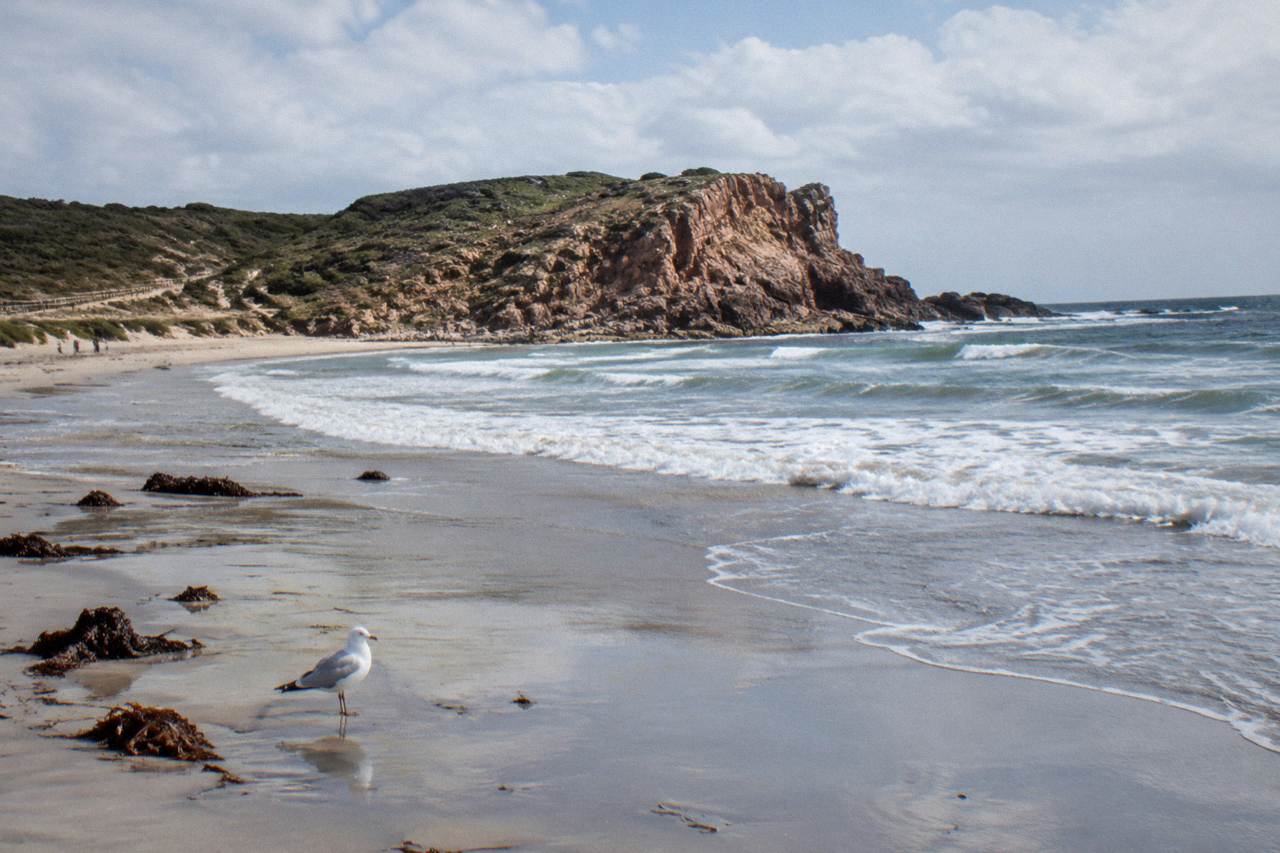
Yes, and a full day fills fast. Phillip Island Nature Parks describes Cape Woolamai as the island's highest point, with walking tracks from 4.4 to 8.1 kilometres, and roughly half a million short-tailed shearwaters arriving there each spring. Add the viewing platforms at The Nobbies, the pelican feeding at San Remo and the Whale Discovery Trail, and the question becomes how to fit a cruise in at all.
Phillip Island tends to get compressed into two experiences: a boat trip and the evening penguin arrival. Both deserve their reputations, but the island between them rewards anyone with a spare half day. The cape at the island's south-eastern corner carries ancient pink granite cliffs, a former quarry cove and a lookout at 112 metres, the highest point on Phillip Island, with 360-degree views that reach Wilsons Promontory on clear days according to Nature Parks. None of that needs a ticket to the water.
The trick is geography. The cruise ports of San Remo, Cowes and Rhyll sit around the island's edge, and the land highlights sit between them. San Remo to Cowes is 17 kilometres and about 25 minutes in the car, per Visit Victoria's touring route figures, and Cowes to the Penguin Parade is another 12 kilometres. Someone planning a single cruise can build an entire loop around it, pairing the boat trip with a walk, a lookout or a town wander on either side of departure.
For visitors weighing the boat options, the three below cover the classic pairing: the short scenic cruise around Cape Woolamai, the 2 hour seal watching trip from Cowes, and the full Melbourne day trip that bundles a cruise with the evening penguin stop. Each anchors a different style of island day.
A day on Phillip Island fills up fast beyond the boat: the Cape Woolamai walks, the seal lookouts at The Nobbies, the free sights around San Remo and Cowes, and the winter whale trail that turns the whole coastline into a viewing platform. It finishes with the practical question of how to build one itinerary that carries all of it.
What Can You Do At Cape Woolamai Without A Boat?
Four signed walking tracks, all starting from the beach car park via a ramp and stairs, cover the cape: the Pinnacles return at 4.4 km over 2 hours, the Quarry loop at 4.9 km over 2.5 hours, the Beacon loop at 7.2 km over 4 hours and the full Cape Woolamai circuit at 8.1 km over 4.5 hours. No entry fee is listed on the Nature Parks page for any of them.
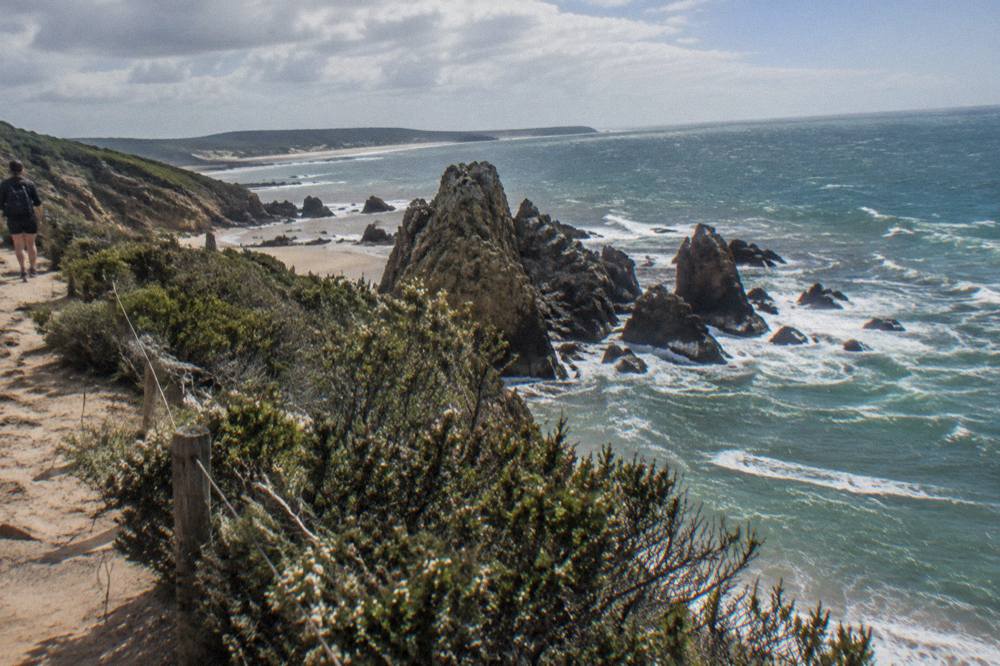
The cape is the island's big landscape. Nature Parks calls it Phillip Island's highest point, and the beacon lookout sits at 112 metres with a full circle of view over the island, San Remo and, on clear days, Wilsons Promontory. The rock beneath is ancient pink granite, in the words of Visit Victoria, and one cove along the track "was a busy granite quarry in the late 1800s", a detail that gives the Quarry loop its name. The Pinnacles, the rock formations visible from viewing platforms on the clifftop, are the photographic payoff of the shorter walk, and Nature Parks notes the walks range from 4 to 8 kilometres in total.
The wildlife is the part many visitors miss. Nature Parks records approximately half a million short-tailed shearwaters at Cape Woolamai, birds that arrive in late September after a 16,000 km migration from the Aleutian Islands, with their dusk return running between late September and mid-April per Visit Victoria. Standing on the beach at dusk in that window means watching one of the great natural arrivals on the Australian coast, no booking required. Hooded plovers nest on the same beach, a locally endangered species, and snakes are active in warm weather. First Peoples have visited these dunes for many thousands of years, and protected middens along the coast speak to that history.
Two cautions shape a safe walk. Nature Parks warns that Cape Woolamai is exposed and can experience severe weather changes, so a calm departure can turn windy on the clifftop, and Cleeland Bight on the longer tracks may be impassable at very high tide. Stay 10 metres back from cliff edges and cliff bases, and carry more water than the distance suggests, because the exposed sections offer little shade. The full track set looks like this:
| Track | Distance | Time | Grade |
|---|---|---|---|
| Pinnacles return | 4.4 km | 2 hrs | easy/moderate |
| Quarry loop | 4.9 km | 2.5 hrs | moderate |
| Beacon loop | 7.2 km | 4 hrs | moderate |
| Cape Woolamai circuit | 8.1 km | 4.5 hrs | moderate |
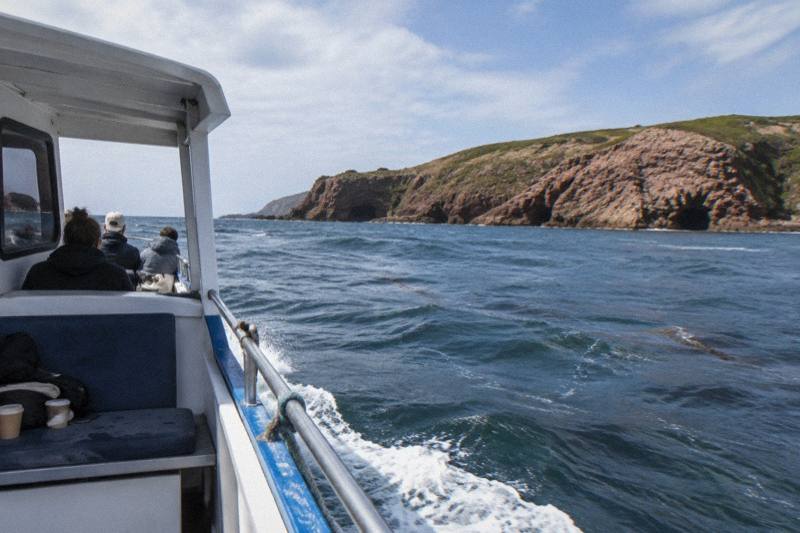
Seeing the same cliffs from the water is a different experience again, and the guide to Cape Woolamai by boat covers how the two perspectives stack up. The Wildlife Coast Cruises 1 hour Cape Woolamai Scenic Cruise from San Remo, from $34 per person and rated 4.6 across 453 reviews, cruises toward the cape and views the granite cliffs and caves from the water, with cake, tea and coffee on board. Its bow deck is reserved for passengers over 1 metre tall, a detail families with small children should know before boarding.
What Is There To See At The Nobbies?
Viewing platforms with coin-operated binoculars and interactive cameras look out over the coast at The Nobbies, which DEECA describes as the land viewing point for the Seal Rocks fur seal colony, one of Australia's largest. Seal Rocks itself lies about 1.8 km off Phillip Island, so the platforms give a distant look at a colony Nature Parks puts at around 20,000 Australian fur seals.
The Nobbies is the answer for anyone who wants to see seals without setting foot on a boat. DEECA, the state wildlife authority, notes that at the Nobbies Centre there are viewing platforms with coin-operated binoculars as well as interactive cameras, positioned for the seaward view toward the colony. The numbers behind the view are striking: Nature Parks says Seal Rocks provides an important breeding area and nursery for around 20,000 Australian fur seals, with between 5,000 and 8,000 seals on the rocks at any given time, varying with tide, temperature, time of day and weather. Numbers ashore are never fixed, so two visits on two days can look quite different.
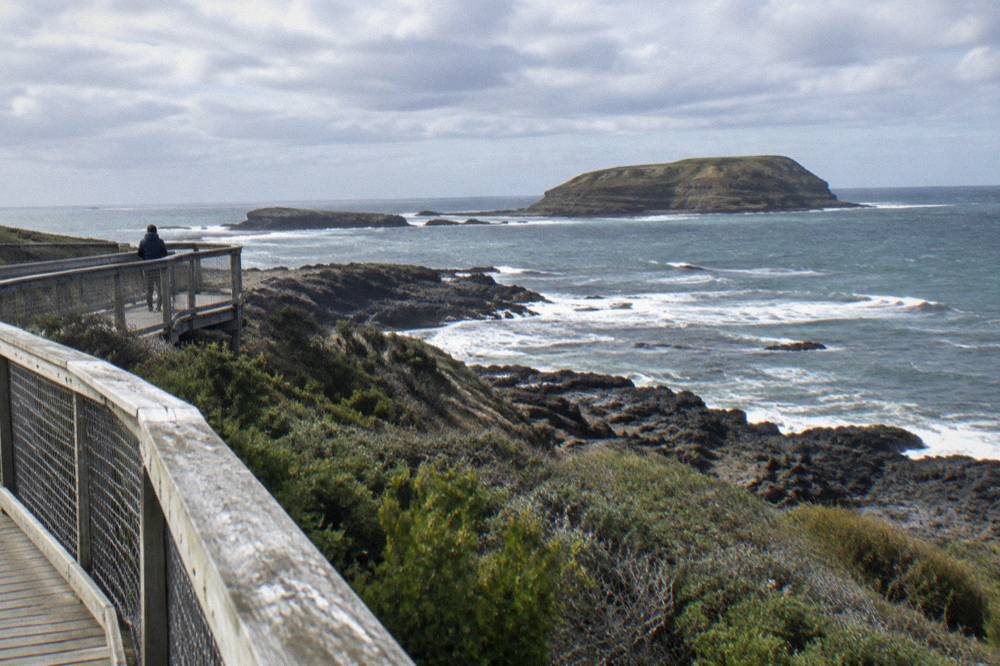
The colony has a hard-won history. Seals were over-harvested in the 1800s and now sit at around half their estimated original population size, according to Nature Parks, which notes the wildlife reserve at Seal Rocks was created in 1928 and the killing of seals was banned in Victorian waters in 1975. Pups are born in late spring, one per female, and the breeding season ends in late December when the big males leave. Pups are weaned by 10 to 11 months, and the seals return to the rocks to rest after 7 to 10 days at sea.
A land view and a water view are genuinely different products, and the comparison of The Nobbies and Seal Rocks by cruise breaks down when the boat is worth it. The Wildlife Coast Cruises 2 hour Seal Watching Cruise from Cowes, from $79 per person and rated 4.9 across 236 reviews, names Seal Rocks as its destination and serves tea, coffee and cake on the way. That rating comes from the largest review pool of any trip besides the Cape Woolamai scenic cruise, which matters when comparing small-sample scores.
What Can You Do Around San Remo And Cowes Between Trips?
San Remo offers a pelican feeding at the wharf, with Visit Victoria advising arrival before midday, while Cowes serves as the island's main town on the drive between cruise ports. Melbourne to San Remo is 123 km and about 1 hour 35 minutes, and San Remo to Cowes is another 17 km and 25 minutes, so the two towns anchor either end of a simple loop.
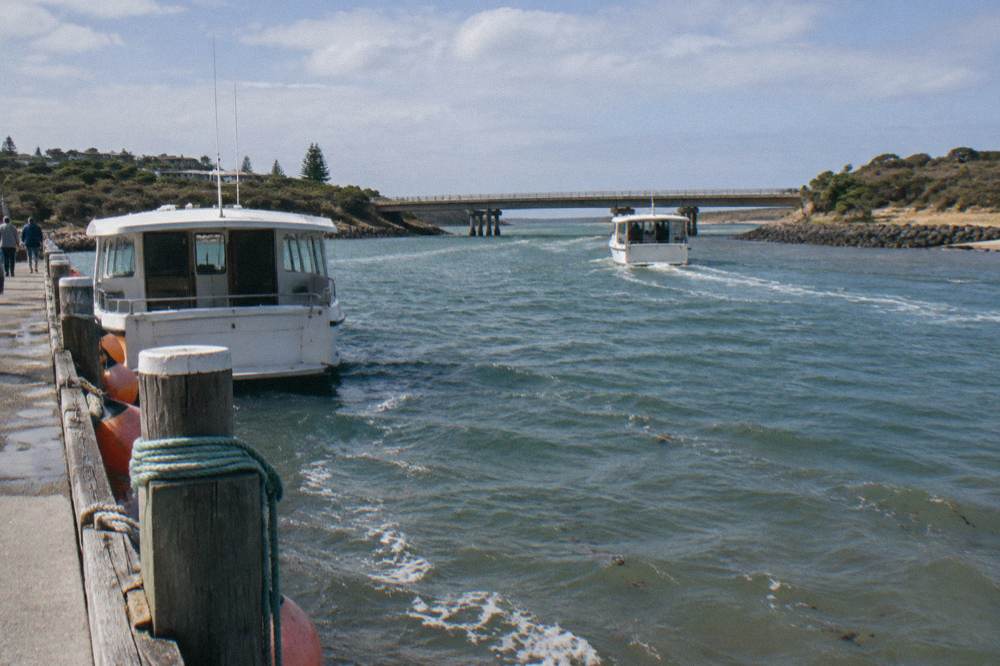
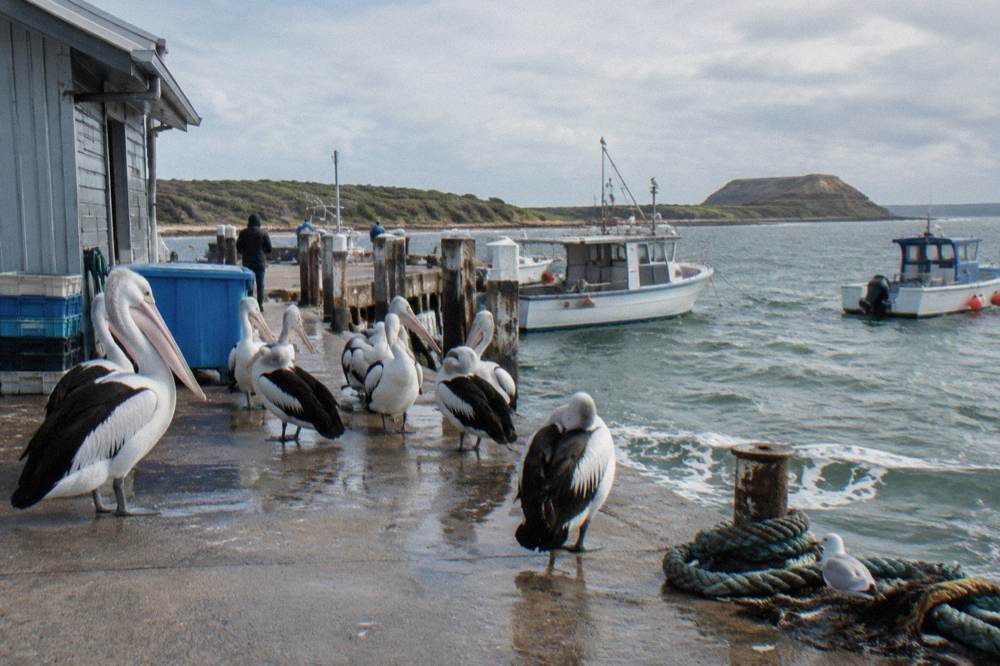
Visit Victoria describes San Remo as the gateway to Phillip Island and suggests arriving before midday for the pelican feeding at the San Remo wharf. Arrive before midday, the tourism body advises, and the birds gather at the jetty for the event. For cruise passengers departing from San Remo, which three of the six cruises on this site do, the feeding can slot neatly before a departure, and the guide to things to do in San Remo with cruises first maps out that ordering.
The bridge beside town has its own story. The San Remo Bridge, also known as the Phillip Island Bridge, links San Remo to Newhaven and carries 3.5 million tourists and up to 15,000 vehicles a day, according to the Premier of Victoria, whose office announced a $50 million restoration in July 2026. The bridge stays open to traffic and pedestrians throughout the works, expected to finish mid-2028, and marine vessel access beneath it remains available. The wider set of guides lives on Cape Woolamai Cruises.
Cowes, 25 minutes north-west, is the departure point for the seal watching cruise and the practical base for most visitors. Newhaven, at the island end of the bridge, is what Visit Victoria calls Phillip Island's picturesque fishing village, worth a slow pass on the way in. The distances hold together simply:
| Leg | Distance | Drive time |
|---|---|---|
| Melbourne to San Remo | 123 km | 1 hr 35 min |
| San Remo to Cowes | 17 km | 25 min |
| Cowes to the Penguin Parade | 12 km | 14 min |
Where Does The Whale Discovery Trail Run?
The Whale Discovery Trail runs from Eagles Nest in the east to Cowes, per Visit Phillip Island, tracing the winter whale season from late May to September with its peak in June and July. Humpbacks are the most commonly sighted whales around the island, the cruise operator reports, with southern rights and occasional killer whales also passing, and sightings are posted on the Wildlife Whales app and PodWatch.
Whale watching on Phillip Island does not begin at a jetty. The trail stitches together coastal lookouts along the island, so a winter visitor can spend a morning scanning from headlands and an afternoon on the water. Visit Phillip Island lists humpback, southern right and occasionally killer whales in winter, and notes that southern rights can sometimes be seen in quite shallow waters within 100 metres of the coast, which is precisely why the shore lookouts earn their place on the trail. Nature Parks adds that from late May to early July the northbound migration passes Cape Woolamai, and the operator names Cape Woolamai, Pyramid Rock, The Nobbies and San Remo as coastal viewing spots.
No sighting is ever promised, on land or off, and the operator itself describes humpbacks as by far the most commonly sighted rather than certain. Orcas occasionally visit, the same operator notes, because seals are a main prey, and lucky observers have reported pygmy blue whales and minke whales in Bass Strait from time to time, though those stay further offshore and more elusive. For those who want the boat version, the Wildlife Coast Cruises 3 hour Dolphin And Whale Cruise from San Remo runs from $93 per person, rated 4.6 across 83 reviews, from late May to September, and the 4 hour Whale Watching Cruise from Rhyll, from $122.77 per person and rated 4.7 across 97 reviews, covers the same season. More detail sits in the guide to the Phillip Island whale watching season.
Can You Fill A Whole Day Around A Single Cruise?
Yes. A one hour cruise from San Remo pairs with the Cape Woolamai walks in the same corner of the island, a 2 hour seal cruise from Cowes pairs with The Nobbies and the Penguin Parade, and visitors without a car can reach the island by V/Line coach or the Western Port Ferries passenger ferry between Stony Point and Cowes. For help fitting a boat trip and the parade into the same day, the guide to pairing a Phillip Island cruise with the Penguin Parade covers prices, departure points and drive times.
The shortest boat trip on this site, the Wildlife Coast Cruises 1 hour Cape Woolamai Scenic Cruise from San Remo, costs from $34 per person and needs barely a morning. San Remo sits just 5.1 km straight-line north-northeast of the cape itself, so a scenic cruise and the Pinnacles return walk can share one day with the pelican feeding thrown in. A winter pairing works too, since the whale trail lookouts sit on the same coastline the cruise skirts.
Visitors starting in Melbourne have two paths. The drive from Melbourne to San Remo is 123 km and about 1 hour 35 minutes, per Visit Victoria. Without a car, the V/Line route between Cowes, Inverloch and Melbourne stops at Cowes Transit Centre, Cape Woolamai/Phillip Island Rd and the San Remo Post Office on Marine Pde, and Western Port Ferries runs a passenger ferry between Stony Point Jetty and Cowes. Neither source ties a stop to a cruise departure point, so check the operator's directions when booking. The guide to reaching San Remo for a cruise covers the options in detail, and the post on getting to a cruise from Melbourne without a car works through the car-free case.
The simplest full-day answer is the Local Way Tours Melbourne day trip with a Wildlife Coast Cruise leg, about 12 to 13 hours door to door, from $235.03 per person and rated 4.8 across 41 reviews, a small but strong pool. It departs Arts Centre Melbourne, runs a 2 hour cruise leg, stops at The Nobbies on land and finishes at the Penguin Parade, with lunch and dinner left to your own time and a group cap of 15. Free cancellation applies up to 24 hours before, and a weather cancellation by the operator gives the choice of another date or a full refund. The post on doing a Phillip Island cruise as a Melbourne day trip weighs whether that convenience beats driving yourself.
Free cancellation up to 24 hours before departure, with a full refund, is stated on all six cruises on this site, which makes booking ahead low risk even when the rest of the day is still taking shape. The whale watching, sunset and Melbourne booking pages add a weather-cancellation clause offering another date or a full refund, and the Melbourne day trip carries a minimum-travellers clause worth reading before booking. Anyone still building an itinerary can start with the overview of Phillip Island cruises or the roundup of free things to do around a Phillip Island cruise.
To close the loop, here again are the three trips that anchor most visitors' island days: the short Cape Woolamai scenic cruise, the Cowes seal watching trip, and the full Melbourne day tour with a cruise leg and the Penguin Parade.
Common Questions About Phillip Island Beyond A Cruise
Is There Anything To Do On Phillip Island Besides A Cruise Or The Penguin Parade?
Yes. Cape Woolamai has four walking tracks from 4.4 to 8.1 km, The Nobbies has viewing platforms for the Seal Rocks colony, San Remo has a pelican feeding at the wharf, and the Whale Discovery Trail runs from Eagles Nest to Cowes in the winter season.
Are The Cape Woolamai Walks Free?
The Nature Parks page for Cape Woolamai lists no entry fee. The tracks run 4.4 km to 8.1 km from the beach car park, and no booking is needed for the walks themselves.
Can You See Seals Without Taking A Cruise?
Yes, from a distance. The Nobbies Centre has viewing platforms with coin-operated binoculars and interactive cameras, per DEECA, looking toward Seal Rocks about 1.8 km offshore, where between 5,000 and 8,000 seals may be on the rocks at any given time.
When Can You See Whales From Phillip Island's Coast?
Visit Phillip Island places the whale season from late May to September, peaking in June and July, with humpbacks the most commonly sighted. The Whale Discovery Trail from Eagles Nest to Cowes links coastal lookouts, and sightings are posted on the Wildlife Whales app and PodWatch.
How Long Should You Allow For A Phillip Island Day Without A Boat?
A full day covers it: the Cape Woolamai circuit alone takes about 4.5 hours, the drive from San Remo to Cowes is 25 minutes, and Cowes to the Penguin Parade is another 14 minutes, so a walking morning and a lookout afternoon fit comfortably.