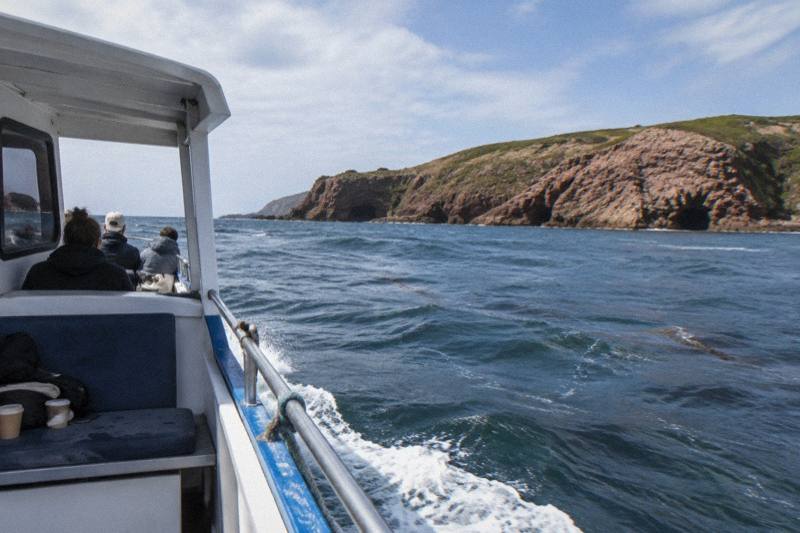
Free Things To Do Around Your Phillip Island Cruise
A cruise is the paid centrepiece of a Phillip Island day, but the hours around it can be filled with walks, lookouts and wildlife that cost nothing to stand in front of. Here is what the island's own official sources say is free, or lists with no fee attached, near each cruise departure point.
Short answer
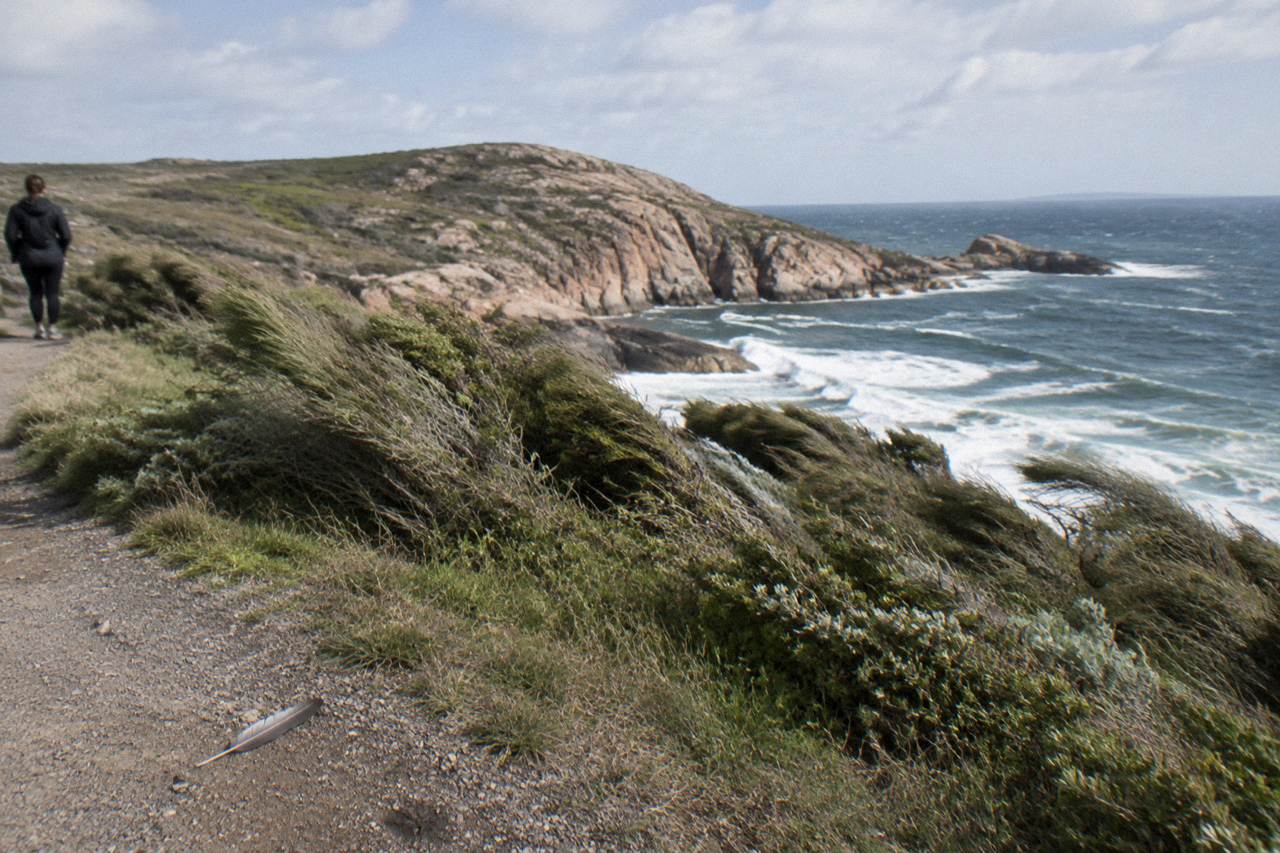
Free options around a Phillip Island cruise include the Cape Woolamai walking tracks (no entry fee listed), the pelican feeding at San Remo wharf, the Whale Discovery Trail lookouts, and seal viewing platforms at The Nobbies. Melbourne to San Remo is 123 km, and cruises depart from San Remo, Cowes and Rhyll.
The hours before and after a boat trip are where a Phillip Island day either breathes or collapses into paid attraction after paid attraction. The island sits inside a chain of official reserves, lookouts and shoreline walks, and the sources that describe them, Nature Parks, Parks Victoria, Visit Victoria and the Bureau of Meteorology, point to a surprising amount that carries no ticket at all. This guide lines up the genuinely free things to do around each cruise departure point, then shows how to arrange them around the one or two paid hours on the water.
Three ports matter here. San Remo, the mainland gateway, feeds three cruises including the 1 hour Cape Woolamai Scenic Cruise from $34. Cowes sends out the 2 hour Seal Watching Cruise from $79. Rhyll is the start of the 4 hour Whale Watching Cruise from $122.77 in season. Around each of them sit cliffs, colonies and lookouts that ask for nothing but time, as long as you know which claims are official and which are folklore. Cape Woolamai Cruises keeps the boat side of the day in one place; this page covers everything else.
What Free Things Can You Do On Phillip Island?
The core free activities are the Cape Woolamai walking tracks, which the Nature Parks page lists with no entry fee, the pelican feeding at the San Remo wharf, coastal whale watching from the Whale Discovery Trail lookouts between late May and September, and the viewing platforms at The Nobbies, which DEECA describes as a land-based seal viewing point with interactive cameras.
Visit Victoria describes San Remo as "the gateway to Phillip Island", and suggests arriving before midday for the pelican feeding at the wharf. Nature Parks describes Cape Woolamai as the island's highest point with 360-degree views from the beacon lookout. Visit Phillip Island maps a Whale Discovery Trail running "from Eagles Nest in the East to Cowes". DEECA notes The Nobbies Centre has viewing platforms and interactive cameras. None of these carries a stated price.
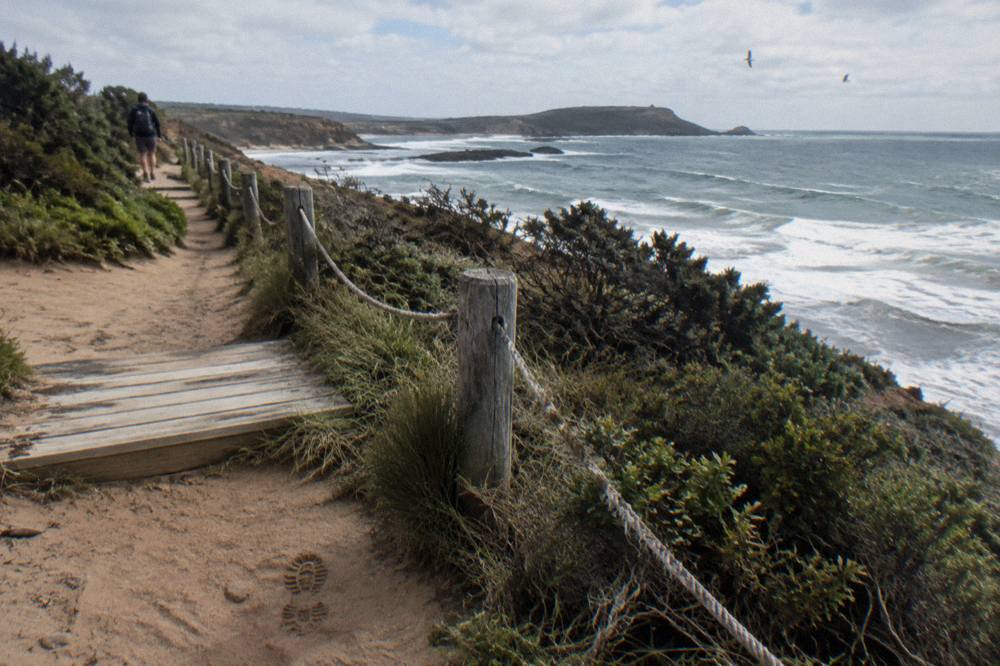
How the free hours stack up against the paid ones is the real planning question. The shortest cruise on this site is one hour; the longest island-based cruise is four. A 12 to 13 hour Melbourne day trip exists too, but that is a tour with a cruise leg rather than a free-time proposition. Around a one-hour boat trip there can easily be four or five free hours of walking and looking, which is why the island rewards arriving early.
| Free activity | Where | Source | Caveat |
|---|---|---|---|
| Cape Woolamai walking tracks | Cape Woolamai | Nature Parks lists no entry fee | Tracks are exposed; weather can change |
| Pelican feeding at the wharf | San Remo | Visit Victoria | Suggests arriving before midday |
| Whale Discovery Trail lookouts | Eagles Nest to Cowes | Visit Phillip Island | Late May to September |
| The Nobbies viewing platforms | Western tip of the island | DEECA | Interactive cameras on site |
The pattern worth noticing is that every free item on that table is also one of the island's signature experiences. The cliff walks at Cape Woolamai and the seal platforms at The Nobbies are the land halves of what the cruises show from the water. Doing both costs one cruise ticket plus shoe leather.
Which Cape Woolamai Walks Cost Nothing?
Nature Parks lists four main walks at Cape Woolamai, the Pinnacles return at 4.4 km, the Quarry loop at 4.9 km, the Beacon loop at 7.2 km and the full Cape Woolamai circuit at 8.1 km, and its Cape Woolamai page lists no entry fee for any of them. All start from the beach car park via the ramp and stairs.
The honest phrasing is "no fee is listed", because the managing body's page simply does not charge or mention a charge. The walks themselves are well documented. The Pinnacles return is graded easy to moderate and takes about 2 hours; it leads to viewing platforms that Visit Victoria says take in "breathtaking views of the Pinnacles", the rock formations that dominate the cape's seaward face. The Quarry Loop is another walk in the Cape Woolamai reserve, an alternative to the Pinnacles return or the full circuit.
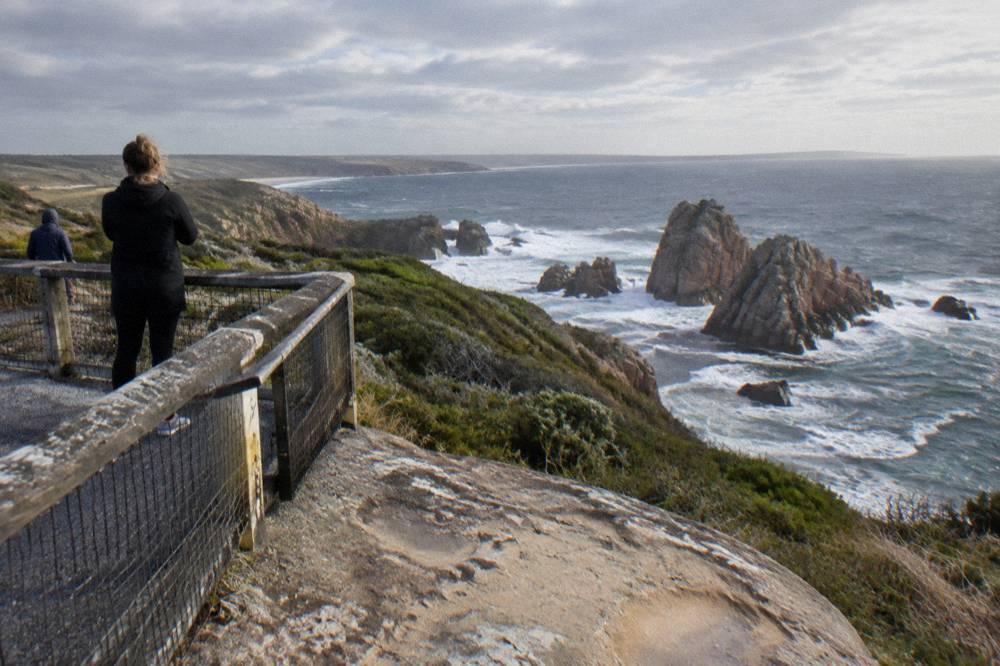
Two safety notes come straight from the managing body and are worth repeating in full. Cape Woolamai "is exposed and can experience severe weather changes", and Cleeland Bight on the longer routes "may be impassable on very high tide". Nature Parks also asks walkers to stay 10 m back from cliff edges and cliff bases, and notes snakes in warm weather. None of that is a reason to skip the walks; it is a reason to carry a layer and check the tide before committing to the circuit.
The cultural layer of the cape is free to stand in as well. Nature Parks records that First Peoples have visited the dunes for many thousands of years and that middens in the area are protected, which is worth knowing before anyone disturbs so much as a shell. Visit Victoria adds that the area was recently declared a National Surfing Reserve, a status that costs nothing to appreciate from the beach the reserve protects.
| Walk | Distance | Time (return) | Grade |
|---|---|---|---|
| Pinnacles return | 4.4 km | 2 hrs | Easy/moderate |
| Quarry loop | 4.9 km | 2.5 hrs | Moderate |
| Beacon loop | 7.2 km | 4 hrs | Moderate |
| Cape Woolamai circuit | 8.1 km | 4.5 hrs | Moderate |
The cape also carries a wildlife story you can stand inside for free. Nature Parks counts "approximately half a million Short-tailed shearwaters" arriving at Cape Woolamai in late September after a 16,000 km migration from the Aleutian Islands, with the dusk return visible between late September and mid-April according to Visit Victoria. Hooded plovers nest on the beach and are locally endangered, so give any roped or signed nesting area a wide berth. The guide to the Cape Woolamai cruise covers what the boat adds that the tracks cannot reach.
What Is Free To Do At San Remo Around Your Cruise?
San Remo's free drawcard is the pelican feeding at the wharf, for which Visit Victoria suggests arriving before midday, and the town is also the departure point for three of the six cruises on this site, all of which offer free cancellation up to 24 hours before departure.
Three cruises leave from San Remo: the 1 hour Cape Woolamai Scenic Cruise from $34, the 3 hour Dolphin And Whale Cruise from $93 in season, and the 1 hour 45 minute Sunset Cruise from $55.42. That makes the town the natural base for a free morning: pelicans before midday, then a walk along the foreshore, then the boat. Visit Victoria calls San Remo "the gateway to Phillip Island", and the bridge to Newhaven sits just across the water.
A few geography facts help with timing. Melbourne to San Remo is 123 km and about 1 hour 35 minutes driving per Visit Victoria's touring route figures, so a pelican-feeding arrival from the city means leaving well before midday. San Remo to Cowes is 17 km, 25 minutes, if the plan mixes a San Remo departure with Cowes stops. The San Remo Bridge itself is in the middle of a $50 million restoration announced by the Premier of Victoria, expected complete mid-2028, but it stays open to traffic and pedestrians throughout, and marine vessel access under the bridge remains available. The post on things to do in San Remo builds a fuller day around the town.
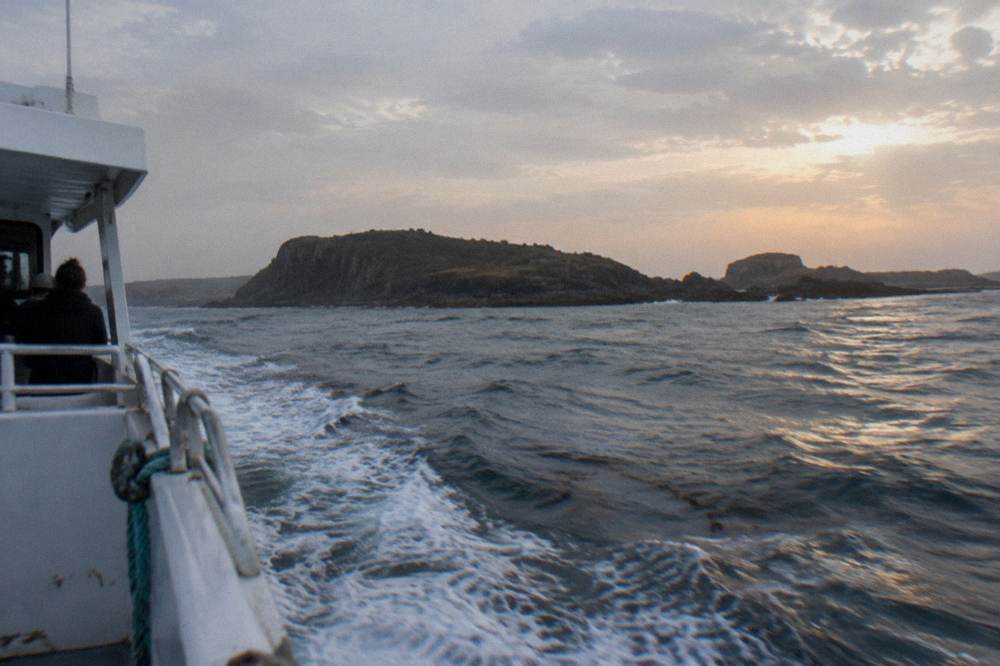
The Sunset Cruise is the one departure that pairs least with a free morning, since it is an evening product, rated 4.7 across a small pool of 39 reviews. Its focus is Western Port Bay from San Remo, with a fruit and nibbles platter included and live music, and drinks, prawn buckets and cheese platters available to purchase. For a free complement, the shearwater dusk return at Cape Woolamai happens in the same window, visible from the clifftops between late September and mid-April. The two experiences are a straight trade of price against effort: one is a $55.42 seat with a platter, the other is a walk to a headland at no listed cost.
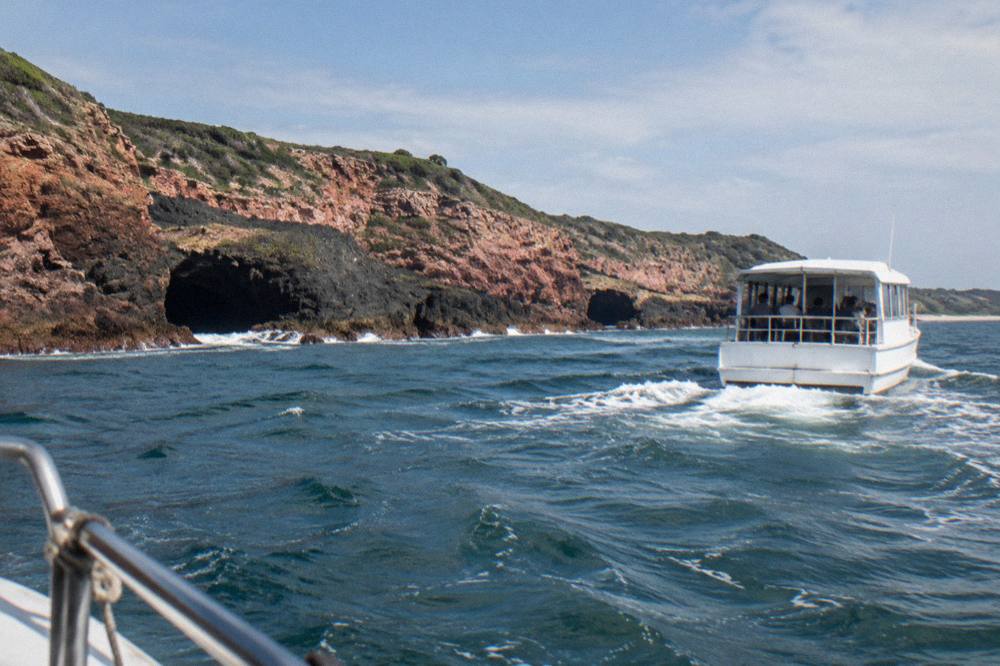
The third San Remo departure deserves its own planning note. The 3 hour Dolphin And Whale Cruise, from $93 and rated 4.6 across 83 reviews, runs late May to September, passes the sheer cliffs of Cape Woolamai and serves tea, coffee and cake with alcohol, soft drinks and snacks available to purchase. Because it is a three-hour commitment in the coldest part of the year, the free layer around it matters more than around the one-hour cruise: a shorter shore walk beforehand and a warm cafe afterwards turn a half-day commitment into a full island day.
What Free Things Are Near Cowes And The Nobbies?
Cowes pairs with The Nobbies at the island's western tip, where DEECA describes viewing platforms with coin-operated binoculars and interactive cameras looking toward the seal colony, and Seal Rocks itself sits about 2 km offshore, with Nature Parks recording 1.8 km and a colony of around 20,000 Australian fur seals.
The Nobbies is the land answer to the Seal Watching question. Nature Parks names it as the land viewing point for the colony, and DEECA's protected areas page explains what is physically there: platforms and cameras. The boat answer is the Wildlife Coast Cruises 2 hour Seal Watching Cruise from Cowes, from $79, rated 4.9 across 236 reviews, the highest rating on this site with at least 200 reviews. It names its Seal Rocks visit and serves tea, coffee and cake. Doing the platform and the boat is a classic pairing, one free, one paid, both aimed at the same colony.
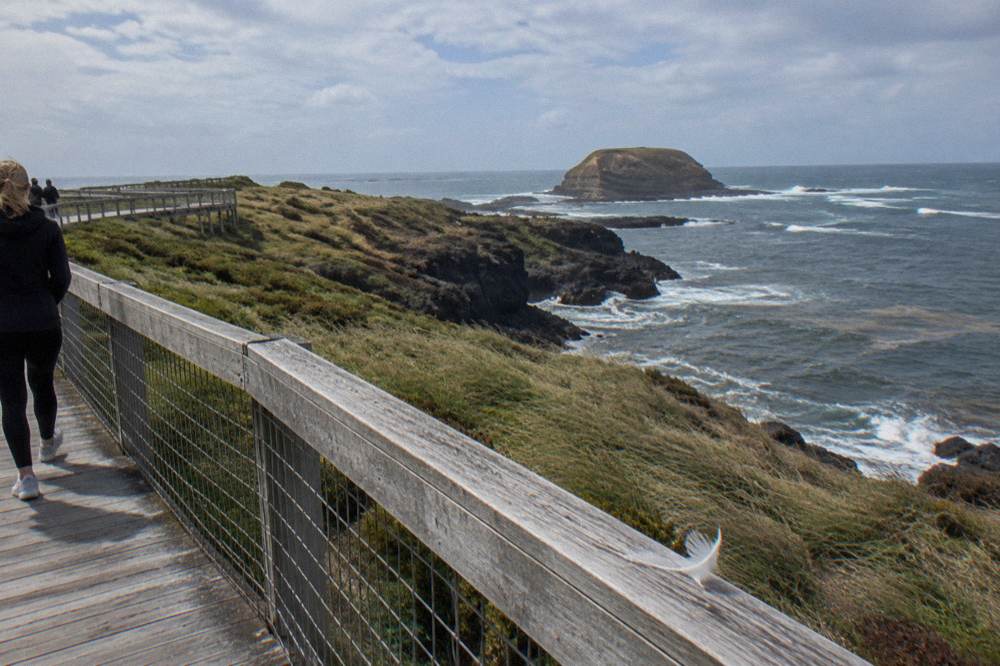
Some care is needed with the colony numbers, because the two official sources describe the same place differently. Nature Parks says Seal Rocks supports "around 20,000 Australian fur seals" and that between 5,000 and 8,000 seals are on the rocks at any given time. DEECA calls it "one of Australia's largest fur seal colonies". Both agree on the standing of the place; neither licenses a promise about how many animals a visitor will see on any given day, since Nature Parks notes that numbers ashore vary with tide, temperature, time of day and weather.
There is also a rule worth knowing before anyone contemplates a private boat: DEECA states that boats must not approach within 60 metres of the low water mark at Seal Rocks, and licensed tour operators are permitted to approach closer subject to operating conditions. That is the practical case for the cruise over the kayak fantasy. Around Cowes itself, the free layer is the foreshore and the Whale Discovery Trail's western end, which Visit Phillip Island runs from Eagles Nest to Cowes. For weighing the boat against the boardwalk, the comparison of a Cape Woolamai cruise and a Seal Rocks cruise works through the trade-offs.
Can You Watch Whales From Shore For Free On Phillip Island?
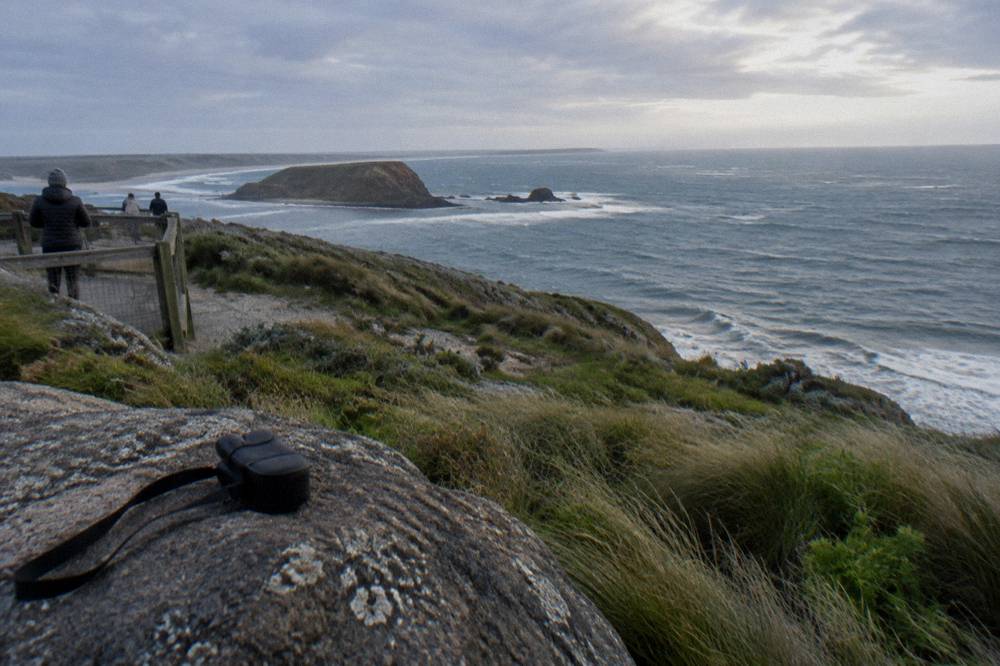
Yes, between late May and September, with peak season June and July per Visit Phillip Island, humpback, southern right and occasionally killer whales pass the island and can be watched from free shore lookouts, including Cape Woolamai, Pyramid Rock, The Nobbies and San Remo, all named by Wildlife Coast Cruises as coastal viewing spots.
Nature Parks records that from late May to early July, humpbacks, southern right and killer whales migrate north past the cape. According to Wildlife Coast Cruises, humpbacks are "by far the most commonly sighted", southern rights often rest in sheltered bays, and orcas are much rarer, seen particularly near seal colonies like Seal Rocks. Sightings get posted on the Wildlife Whales app and PodWatch, which Visit Phillip Island names, so a free shore watch can be aimed at recent activity rather than luck.
The paid version is a choice of two seasonal cruises. The 3 hour Dolphin And Whale Cruise from San Remo, from $93, rated 4.6 across 83 reviews, passes the sheer cliffs of Cape Woolamai and runs late May to September. The 4 hour Whale Watching Cruise from Rhyll, from $122.77, rated 4.7 across 97 reviews, is the longest cruise on the site and includes a morning tea of coffee, tea, a muffin and a pastry; hotel pickup is stated as not included on that one. The guide to Phillip Island whale watching tours compares both in detail.
No whale product on this site promises a sighting, and neither does this page. What the pairing gives you is geometry: the shore lookouts show the migration from a fixed cliff, while the boats can hold to the DEECA viewing rules, which keep vessels at least 200 m from a whale unless the operator holds a permit. A free morning at the Cape Woolamai beacon lookout followed by an in-season cruise is the strongest free-plus-paid combination the island offers in winter.
| Whale watching option | Cost | Duration | Season |
|---|---|---|---|
| Shore lookouts (Cape Woolamai, Pyramid Rock, The Nobbies, San Remo) | No fee listed | Your choice | Late May to September, peak June and July |
| Dolphin And Whale Cruise from San Remo | From $93.00 | 3 hours | Late May to September |
| Whale Watching Cruise from Rhyll | From $122.77 | 4 hours | Late May to September |
How Do You Build A Free-Plus-Cruise Day Without A Car?
It is possible but tighter without a car: the V/Line route from Melbourne serves stops including Cape Woolamai/Phillip Island Rd, San Remo Post Office on Marine Pde and Cowes Transit Centre, and a Western Port Ferries passenger ferry runs between Stony Point and Cowes.
The transport facts come from Transport Victoria and Western Port Ferries respectively, and both stop short of the last hundred metres that matters. The V/Line San Remo stop is the post office on Marine Pde, not the jetty where the boats leave from, and there is also a stop at Cape Woolamai on Phillip Island Rd. The ferry runs from Stony Point to Cowes.
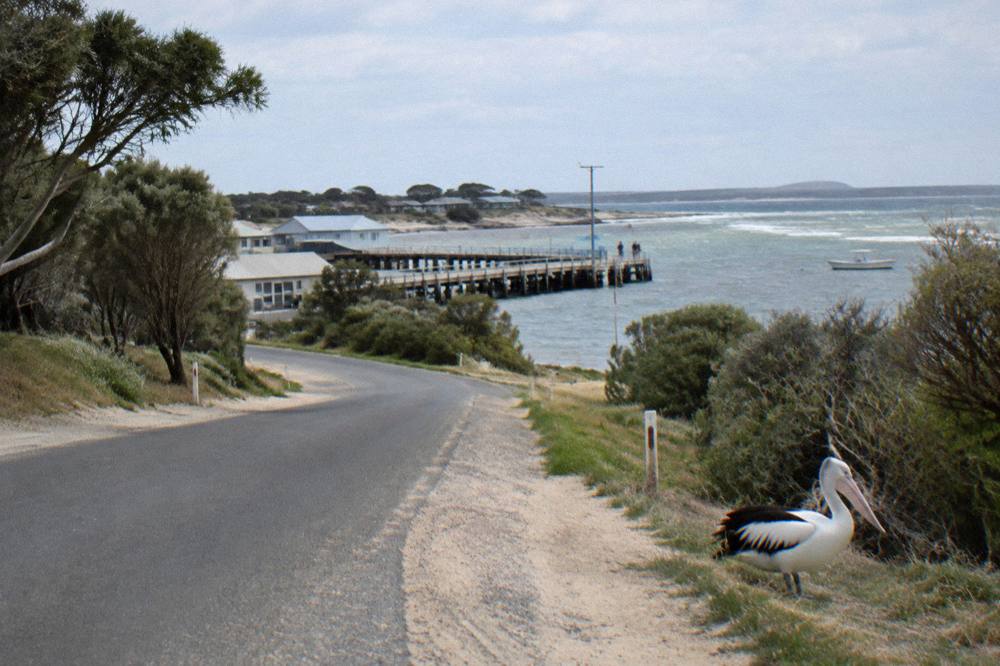
For drivers, the arithmetic is friendlier. A car-free plan leans harder on the free layer: the pelicans at San Remo, the Cape Woolamai stop on the V/Line route, and one cruise from whichever port the day can reach. The guide to getting to San Remo for a cruise and the post on reaching a cruise from Melbourne without a car cover the mechanics.
One warning about weather planning, using the only official numbers available. The Bureau of Meteorology's Rhyll station, on the island's north shore, records July mean maximums of 13.4 °C and June mean minimums of 9.0 °C, with July averaging 12.4 rain days of 1 mm or more. Nature Parks warns independently that Cape Woolamai is exposed and can experience severe weather changes. Dress for the cape: it is exposed and conditions can change fast.
When Is The Best Time To Combine Free Activities With A Cruise?
Summer suits the Cape Woolamai walks and the pelican feeding with January mean maximums of 24.2 °C at the Rhyll weather station, while late May to September brings the whales but pairs them with July mean maximums of 13.4 °C and the year's highest rain-day counts, so the season should choose the plan rather than the reverse.
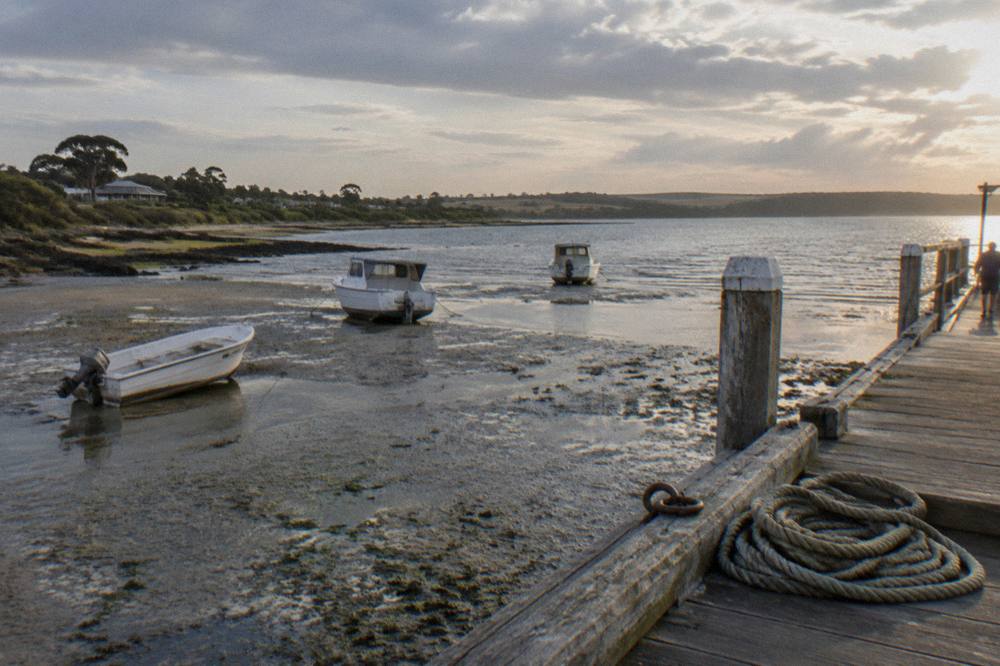
The shoulder logic is straightforward. The 1 hour Cape Woolamai Scenic Cruise and the 2 hour Seal Watching Cruise are not season dependent; the two whale cruises are. The Sunset Cruise runs its own evening schedule. A January day can stack pelicans, a long clifftop walk and a one-hour cruise comfortably; a July day is better built around a short shore watch and the longest whale cruise, since the BoM record shows August is the wettest month on average at 76.6 mm and 12.7 rain days.
| Season | Free strengths | Cruise fit | Weather notes (BoM Rhyll) |
|---|---|---|---|
| Summer (Dec-Feb) | Walks, pelicans, beaches | Cape Woolamai Scenic, Seal Watching, Sunset | Jan mean max 24.2 °C, 5.1 rain days |
| Autumn (Mar-May) | Shearwater dusk returns to mid-April | Check the booking page for cruise dates | Apr mean max 19.7 °C |
| Winter (Jun-Aug) | Whale lookouts from shore | Both whale cruises, late May to Sep | Jul mean max 13.4 °C, 12.4 rain days |
| Spring (Sep-Nov) | Shearwaters arrive late September | Check the booking page for dates | Sep mean max 16.2 °C |
Budget the day around one number: the median per-person from-price across the six cruises on this site is $86, with the cheapest at $34 and the Melbourne day trip at $235.03. A free-plus-one-cruise day can therefore land at the very bottom of that range while still touching the cape, the colony and the cliffs, because the free layer carries so much of the island's signature scenery.
A final honest note on "free". This page says "no fee is listed" where the managing body's own page lists none, which is what the Nature Parks Cape Woolamai page does. Prices on the paid side, cruise fares, platters and purchases, sit on each operator's booking page and can change, and every cruise figure above is a "from" price per person. Check availability on the operator's booking page before locking a day plan around a departure.
Common Questions About Free Things On Phillip Island
What Free Things Can You Do On Phillip Island?
The Cape Woolamai walking tracks, which the Nature Parks page lists with no entry fee, the pelican feeding at the San Remo wharf, the Whale Discovery Trail lookouts between late May and September, and the viewing platforms at The Nobbies.
Are The Cape Woolamai Walks Free?
The Nature Parks Cape Woolamai page lists no entry fee for the four main walks, from the 4.4 km Pinnacles return to the 8.1 km Cape Woolamai circuit. No fee is listed and free is not guaranteed. The cape is exposed and can experience severe weather changes.
Where Can You Watch Whales For Free On Phillip Island?
From shore lookouts including Cape Woolamai, Pyramid Rock, The Nobbies and San Remo, between late May and September with the peak in June and July. Sightings are never promised; the Wildlife Whales app and PodWatch post recent activity.
What Is Free To Do At San Remo Before A Cruise?
The pelican feeding at the San Remo wharf, with Visit Victoria advising arrival before midday. San Remo is the departure point for three of the six cruises on this site, so the feeding fits naturally before a departure.
Can You See The Seals At Seal Rocks Without A Cruise?
Yes, from The Nobbies viewing platforms, where DEECA describes coin-operated binoculars and interactive cameras aimed at the colony. The boats keep at least 60 m from the low water mark under DEECA rules, while licensed cruise operators may approach closer under permit conditions.
How Much Does A Free-Plus-Cruise Day On Phillip Island Cost?
Only the cruise fare. The cheapest is the 1 hour Cape Woolamai Scenic Cruise from $34 per person, and all six cruises carry free cancellation up to 24 hours before departure.