Phillip Island Whale Watching Season: When The Whale Cruises Run
Whale cruises around Phillip Island run in a narrow winter window, late May to September, and picking the right month inside it shapes everything else about the trip.
Short answer
The Phillip Island whale watching season runs late May to September, with peak sightings in June and July, per Visit Phillip Island. Two cruises cover the season: a 3 hour Dolphin And Whale Cruise from San Remo from $93, and a 4 hour Whale Watching Cruise from Rhyll from $122.77, both per person.
Winter on Phillip Island is whale season, and the window is narrower than many visitors expect. Visit Phillip Island puts the season at late May to September, with the peak in June and July, and the two boat products that serve it, the Wildlife Coast Cruises 3 hour Dolphin And Whale Cruise from San Remo and the Wildlife Coast Cruises 4 hour Whale Watching Cruise from Rhyll, are both seasonal bookings that exist only inside that stretch of the calendar. Everything else on this page, the species, the weather, the shore viewing and the timing decisions, hangs off those two facts.
This guide works through the season month by month, explains which cruise leaves from which port, and covers what the Bureau of Meteorology's nearest open station says a June or July day actually feels like on the island. It also sets out the rules that keep boats a legal distance from whales, and what to do with a trip planned for October or April, when the whale cruises are off and other boats are still running. For the wider picture across every cruise on the island, the guide to all Phillip Island cruises covers the full range, with dates for each one on its booking page.
When Is The Phillip Island Whale Watching Season?
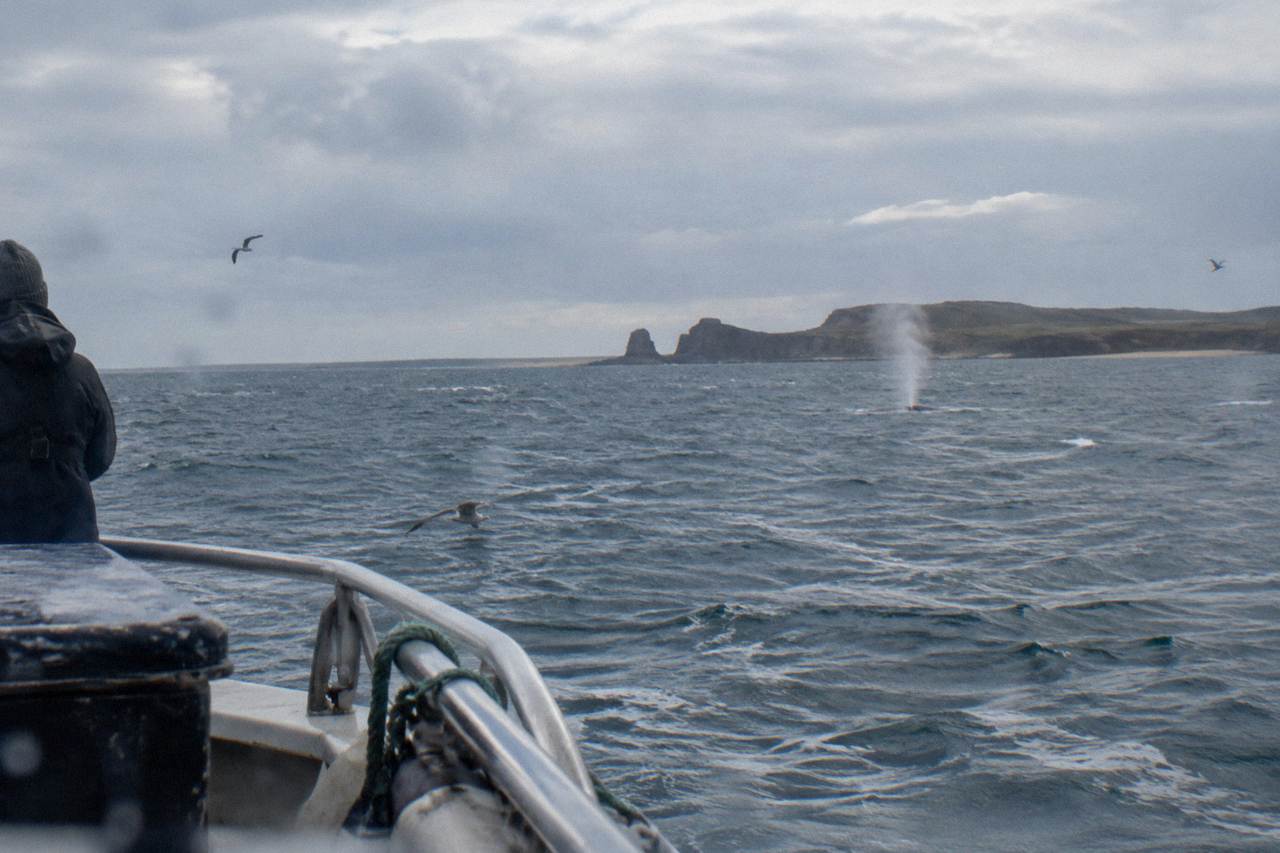
The Phillip Island whale watching season runs from late May to September, with June and July the peak months, according to Visit Phillip Island. Phillip Island Nature Parks describes a northbound migration of humpback, southern right and killer whales from late May to early July. Both whale cruises on the island, from San Remo and from Rhyll, are seasonal products that run only inside this window.
That late May to September span is the official regional wording, and it is the one to plan around. The biology underneath it is a migration: whales move north along the Victorian coast toward warmer breeding waters, then head back south with calves later in the season. Nature Parks, which manages the reserves around Cape Woolamai and The Nobbies, dates the northbound leg late May to early July and names humpbacks, southern right whales and killer whales in that movement. Visit Phillip Island's whale watching page is the source for the wider September end date and the June and July peak.
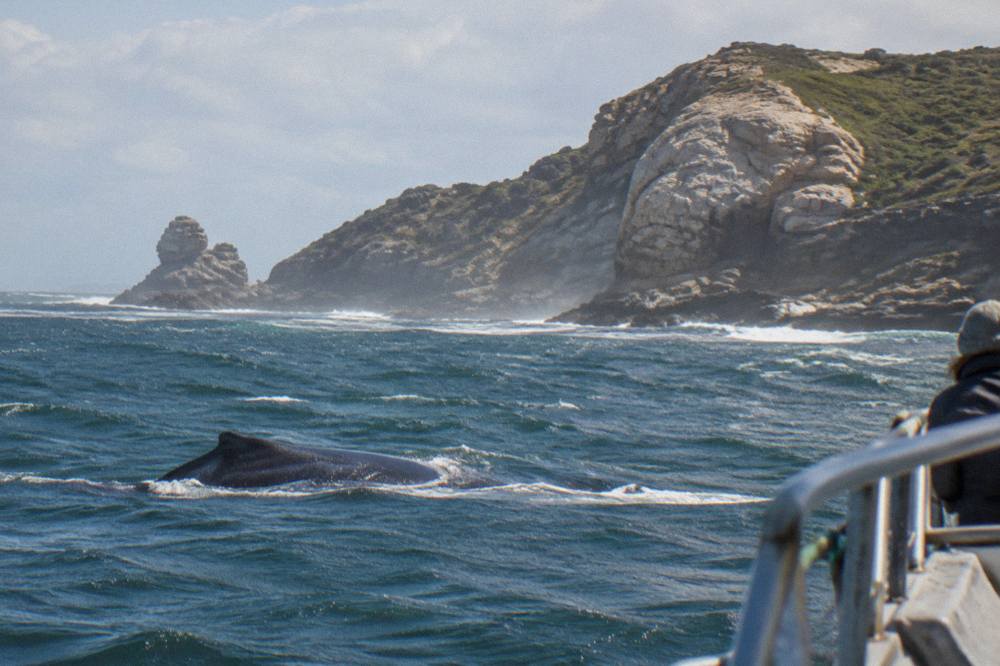
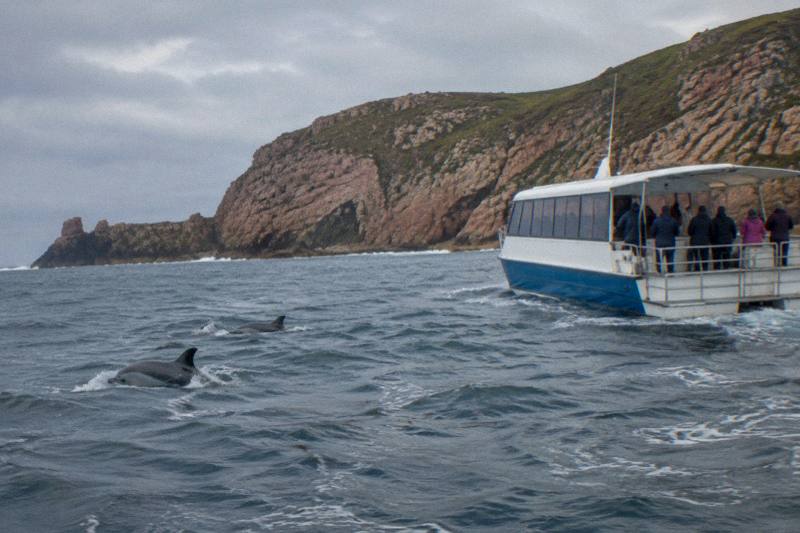
Two of the six cruises on this page are whale watching cruises, and both give the season as late May to September. The Wildlife Coast Cruises 3 hour Dolphin And Whale Cruise from San Remo (seasonal) costs from $93 per person and passes the sheer cliffs of Cape Woolamai. The Wildlife Coast Cruises 4 hour Whale Watching Cruise from Rhyll (seasonal) costs from $122.77 per person, runs 4 hours, and includes morning tea. Neither runs outside the season, and no date for any given year can be stated here: check the operator's booking page for the sailing dates in the month you want.
The rest of the island's cruise calendar does not stop when whale season starts. The 1 hour Cape Woolamai Scenic Cruise from San Remo, from $34 per person, is the most reviewed cruise on this site at 4.6 across 453 reviews; the booking page states no season for it, so check it for dates. The 2 hour Seal Watching Cruise from Cowes, 4.9 across 236 reviews, from $79 per person; the page names no season. A winter trip can stack a whale cruise with either of these on the same visit.
Which Months Are Peak For Whale Sightings Near Phillip Island?
June and July are the peak of the Phillip Island whale watching season, per Visit Phillip Island, sitting inside the late May to September window. Nature Parks dates the northbound migration of humpbacks, southern rights and killer whales late May to early July, which puts the strongest whale traffic in the first half of the season.
If the goal is the single best month, June sits inside both the migration peak and the sailing calendar, and July keeps the momentum with the regional peak still in force. The two months are the peak of the whale season around the island, per Visit Phillip Island. August and September still fall inside the season, though the official peak wording belongs to June and July only.
A month-by-month read of the season looks like this:
| Month | Season status | What it means for booking |
|---|---|---|
| Late May | Season opens | First sailings; northbound migration begins per Nature Parks |
| June | Peak | Migration traffic at its peak |
| July | Peak | Regional peak per Visit Phillip Island |
| August | In season | Late season; return traffic with calves is possible |
| September | Season closes | Season closes; shoulder weather |
| October to mid May | Off season | No whale cruise products run; scenic, seal and sunset cruises continue |
The whale species question sits behind all of this. Visit Phillip Island lists humpback, southern right and occasionally killer whales in winter. Wildlife Coast Cruises, the operator of both seasonal cruises, describes humpbacks as by far the most commonly sighted whale around the island, southern rights as often resting in sheltered bays, and orcas as much rarer, seen particularly near seal colonies like Seal Rocks. The operator also notes that lucky observers have reported pygmy blue whales and minke whales in Bass Strait from time to time, further offshore and more elusive. No cruise here guarantees a sighting, and no sighting is ever promised.
The practical read: book June or July if whales are the whole point of the trip and you want the deepest part of the season, and book the shoulders, late May or September, if you would rather trade a little migration traffic for quieter decks and easier accommodation. Either way, the date you pick is the single biggest decision on this page, bigger than which cruise or which port.
Which Whale Cruises Run In The Season, And From Where?
Two cruises serve the season: the Wildlife Coast Cruises 3 hour Dolphin And Whale Cruise from San Remo, from $93 per person, rated 4.6 across 83 reviews, and the Wildlife Coast Cruises 4 hour Whale Watching Cruise from Rhyll, from $122.77 per person, rated 4.7 across 97 reviews. Both run late May to September, both include free cancellation up to 24 hours before departure.
The two products are more different than their names suggest, and the departure ports are the first difference. San Remo is the gateway town on the mainland side of the bridge, 123 km and about 1 hour 35 minutes from Melbourne per Visit Victoria's touring route figures. Rhyll sits on Phillip Island's north shore, east of Cowes. Where you are staying, and whether you want to cross the bridge before an early sailing, often decides which cruise is the right one before price ever enters it.
The San Remo product is the shorter and cheaper of the two, and it is the only whale cruise that names Cape Woolamai on its route, passing the cape's sheer cliffs. Tea, coffee and cake are included, with alcohol, soft drinks and snacks available for purchase. It carries a 4.6 rating from a comparatively small pool of 83 reviews, a count worth knowing when you read the number. The Rhyll product runs a full 4 hours, includes a morning tea of coffee, tea, a muffin and a pastry, and states that hotel pickup is not included. Its 4.7 comes from 97 reviews, also a small pool.
| Dolphin And Whale Cruise (San Remo) | Whale Watching Cruise (Rhyll) | |
|---|---|---|
| Duration | 3 hours | 4 hours |
| From price (USD, pp) | $93 | $122.77 |
| Rating | 4.6 across 83 reviews | 4.7 across 97 reviews |
| Departs | San Remo | Rhyll |
| Onboard food | Tea, coffee and cake; alcohol, soft drinks, snacks to purchase | Morning tea: coffee, tea, muffin, pastry |
| Season | Late May to September | Late May to September |
| Free cancellation | Up to 24 hours before | Up to 24 hours before |
The port split matters for planning a day. Departure points differ across the Cape Woolamai Cruises lineup: some trips leave from San Remo, Cowes or Rhyll, while the Melbourne day tours that include a Phillip Island cruise depart from the city itself, not the island. Three of the six cruises here leave from San Remo, one from Cowes, one from Rhyll and one from Melbourne. Which port serves which cruise is untangled in the post on which cruises leave from San Remo, Cowes and Rhyll, worth a read before you book anything.
Both whale cruises sit in the pricier half of the island's boat tours: the median per person from price across the six cruises is $86, and the Rhyll whale cruise sits above it at $122.77. Against that, it is the longest cruise on this site at 4 hours, and the only one built wholly around whales. Free cancellation up to 24 hours before departure, for a full refund, is stated on both.
How Close Can Whale Cruise Boats Get To Whales?
Victorian rules keep boats at least 200 m from a whale and 100 m from a dolphin, with caution zones extending to 300 m and 150 m respectively, per the Department of Energy, Environment and Climate Action. Licensed tour operators may approach closer under permit conditions. At Seal Rocks, boats must stay 60 m from the low water mark.
The distance rules are set by DEECA's water safety around marine mammals guidance, and they shape what a whale cruise actually is. Inside a caution zone, all vessels must avoid sudden direction changes, hold a constant speed not above 5 knots, leave if the animal shows disturbance, not approach from directly in front or behind, and never come between a mother and her young. Touching or feeding marine mammals is illegal. If a whale approaches the boat, the vessel is not committing an offence.
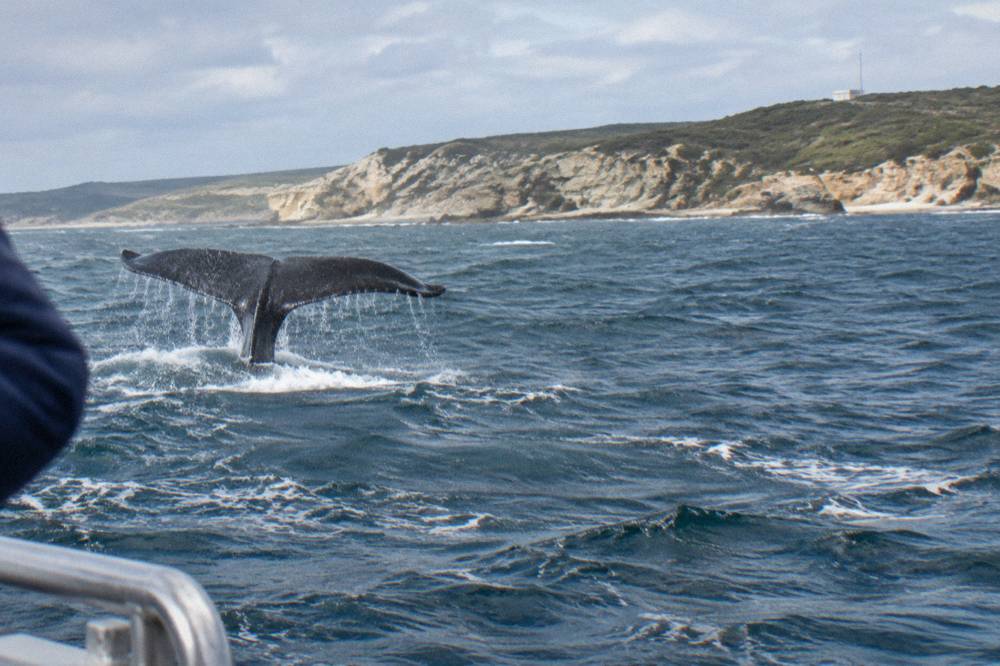
The licensed operator carve out is the piece that matters for a cruise booking. DEECA states that licensed tour operators are permitted to approach closer than the standard distances, subject to a range of operating conditions. Wildlife Coast Cruises holds that licensed status on these waters, which is why a boat with passengers aboard can sit closer to a whale than a private vessel may. Humpbacks are the most commonly sighted around the island, per the operator, with other species more variable, and the regulations point the same way: the crew can hold the boat at the closest distance the law allows, but only the whales decide whether they come near.
A licensed whale cruise also behaves differently around the other wildlife on the route.For the fuller seal picture, the guide to Phillip Island seal cruises covers the 2 hour product from Cowes and the colony it visits, one of Australia's largest fur seal colonies per DEECA, supporting around 20,000 Australian fur seals per Nature Parks' nature notes.
What Is Winter Weather Like On Phillip Island In Whale Season?
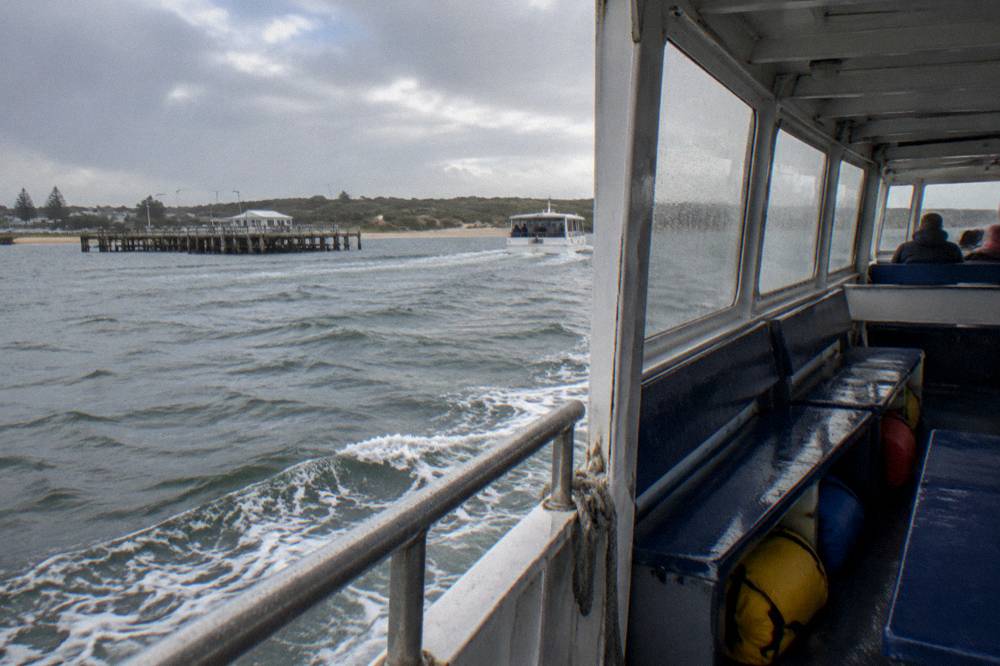
Winter at Rhyll, the nearest open Bureau of Meteorology station, averages a July mean maximum of 13.4 °C and a mean minimum of 8.2 °C, on 36 years of records to 2026. June, July and August each average 66.8 to 76.6 mm of rain, with July recording 12.4 rain days of 1 mm or more. Expect cold, damp, changeable days rather than snow or extremes.
The climate numbers come from the Rhyll station, open since 1990, and they describe the north shore of the island. Cape Woolamai itself, per Nature Parks, is exposed and can experience severe weather changes, a warning that applies to the headland and the water around it more than to the town streets. The practical packing read: waterproof layers, a warm mid layer, and a hat that survives wind. What to actually wear on the water is covered in detail in the post on what to wear on a Phillip Island cruise.
| Month | Mean max (°C) | Mean min (°C) | Mean rainfall (mm) | Rain days (1 mm+) |
|---|---|---|---|---|
| May | 16.5 | 10.8 | 71.8 | 10.8 |
| June | 14.1 | 9.0 | 66.8 | 10.1 |
| July | 13.4 | 8.2 | 69.7 | 12.4 |
| August | 14.4 | 8.5 | 76.6 | 12.7 |
| September | 16.2 | 9.5 | 65.3 | 11.5 |
Read that table with the peak in mind: the best whale months, June and July, are also the coldest and among the dampest. That is the trade the season asks for. August is the wettest month by mean rainfall at 76.6 mm, and 3 pm mean wind speeds across the year run 16.3 to 21.1 km/h at Rhyll, with May the lowest and December the highest on the 1991 to 2010 record.
One honest note on the numbers: the Rhyll station sits on the island's north shore, and the whale waters off Cape Woolamai and toward Seal Rocks face Bass Strait. Treat the table as the island's winter baseline, not a forecast for the open water on any given sailing. If weather cancels a cruise, the post on what happens when weather cancels a Phillip Island cruise explains the mechanics.
Can You See Whales From The Shore At Cape Woolamai?
Yes, shore based whale viewing is a real part of the season. Nature Parks notes humpbacks, southern right and killer whales migrating north past Phillip Island from late May to early July, and Wildlife Coast Cruises names Cape Woolamai, Pyramid Rock, The Nobbies and San Remo as coastal whale viewing spots. No entry fee is listed for the Cape Woolamai reserve.
The shore option is the budget answer to the whale season, and the cape is its centre. The beacon lookout at Cape Woolamai sits at the highest point on Phillip Island, 112 m, with 360 degree views of the island, San Remo and, on clear days, Wilsons Promontory, per Nature Parks. Getting there is a walk: the Beacon loop runs 7.2 km and about 4 hours return, moderate grade, from the beach car park via the ramp and stairs. The shorter Pinnacles return, 4.4 km and 2 hours, trades the beacon for the rock formations known as the Pinnacles, seen from viewing platforms per Visit Victoria.
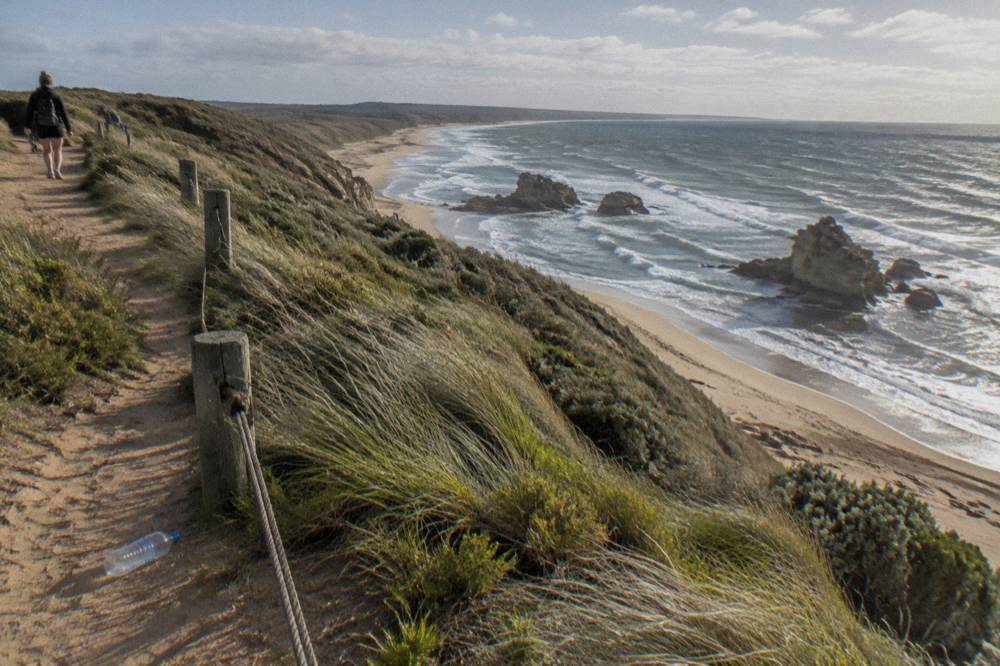
Two cautions come straight from the land manager. Cape Woolamai is exposed and can experience severe weather changes, so a winter walk needs the same layers as the boat. And the Cleeland Bight section of the longer walks may be impassable on a very high tide, so check the tide before committing to the Quarry loop or the full circuit. Stay 10 m back from cliff edges and cliff bases, and expect snakes in warm weather, less a winter issue but worth knowing for late September when the season overlaps warmer days.
The shore season also has its own phenomenon worth timing around. About half a million short tailed shearwaters arrive at Cape Woolamai in late September, per Nature Parks, after a 16,000 km migration from the Aleutian Islands, and their dusk return runs between late September and mid April per Visit Victoria. A very late whale season booking in September can therefore stack two wildlife events in one day: a final whale sailing and the first shearwater returns. The free side of a Phillip Island visit, walks, lookouts and the pelican feeding at the San Remo wharf before midday, is collected in the guide to free things to do around your Phillip Island cruise.
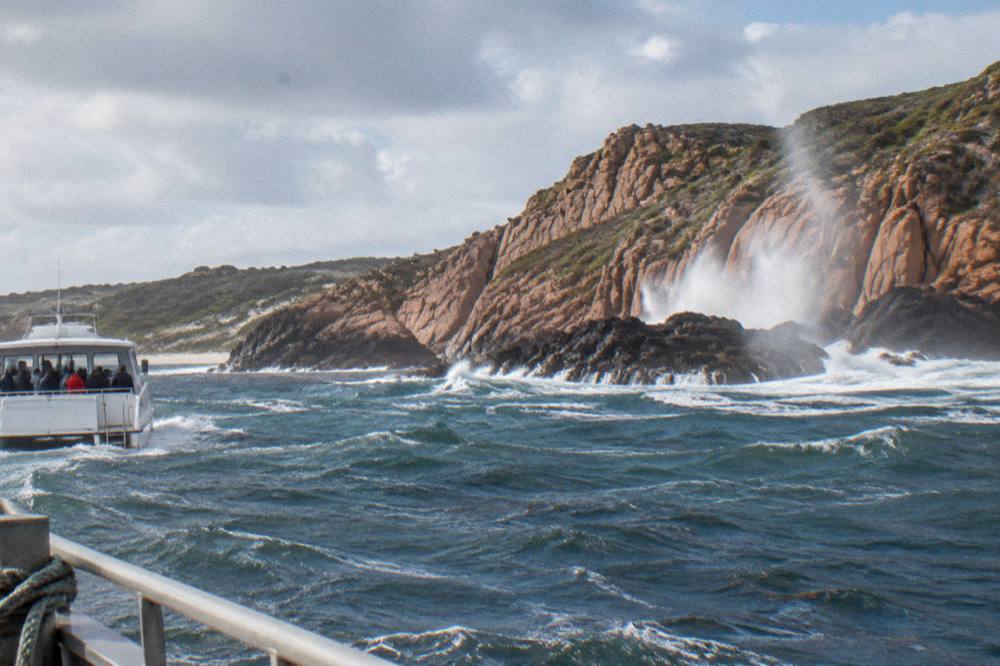
Shore viewing and boat viewing are not the same product, though. From the cliffs you watch the migration pass; from a licensed boat you are inside the caution zone rules with a crew that can legally approach. A reasonable plan for a week in the peak is one cruise day and one clear-day walk to the beacon, in either order, with the weather deciding which happens first.
The Dolphin And Whale Cruise is the shore viewer's natural upgrade: 3 hours from San Remo, from $93 per person, passing the same cliffs you walked, but from the water and inside the licensed distance rules. With 83 reviews it is the smaller pool of the two whale products, and its 4.6 reflects that sample size. The booking page lists tea, coffee and cake, with drinks and snacks to purchase, and free cancellation up to 24 hours before departure.
What Are Your Options Outside The Whale Watching Season?
Outside late May to September, no whale cruise runs from Phillip Island, and the booking pages state no season for the other cruises, so check each one for dates: the 1 hour Cape Woolamai Scenic Cruise from $34, the 2 hour Seal Watching Cruise from $79, the 1 hour 45 minute Sunset Cruise from $55.42, and the Melbourne day trip from $235.03, all per person.
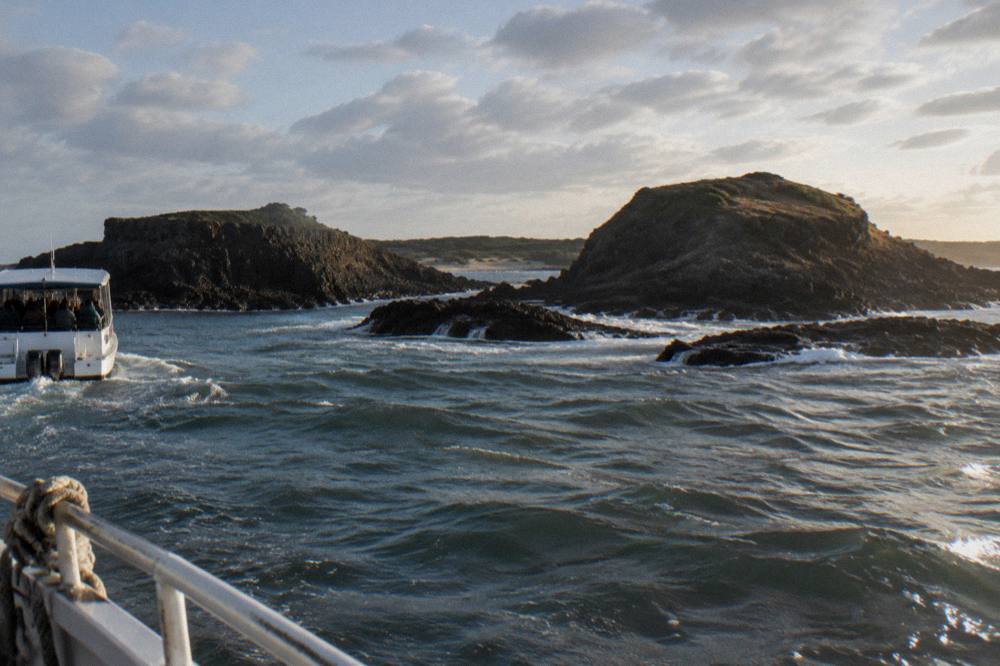
The Seal Watching Cruise from Cowes does not state a season on the booking page, so check there for dates; it is the only cruise that names Seal Rocks, home to a colony Nature Parks describes as a breeding area and nursery for around 20,000 Australian fur seals, with between 5,000 and 8,000 seals on the rocks at times.
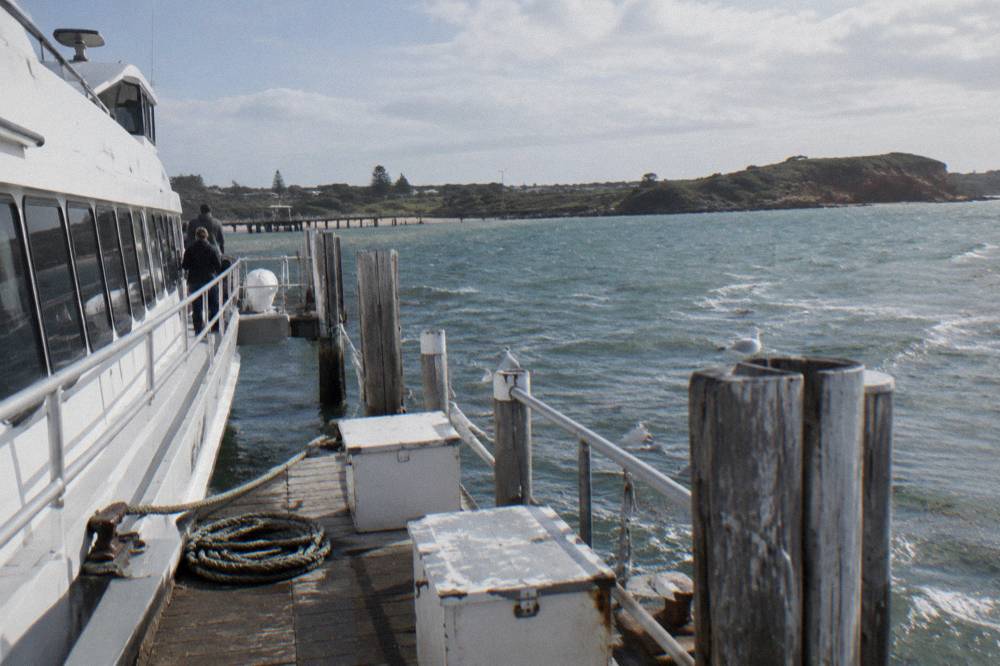
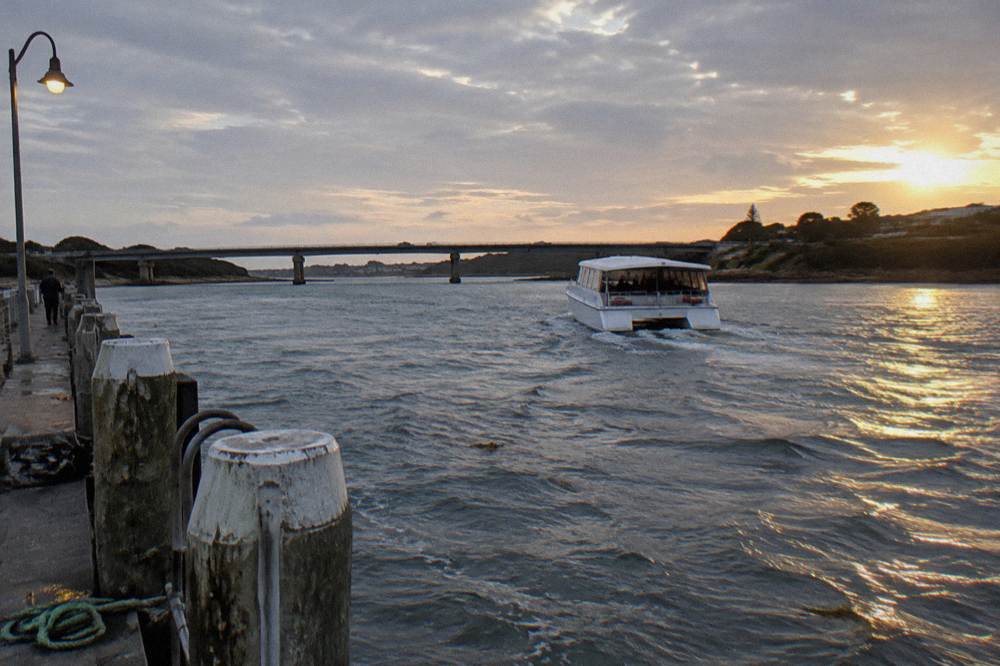
For a spring or autumn trip that had whales at its centre, the sunset cruise is the closest substitute in mood: 1 hour 45 minutes on Western Port Bay from San Remo, from $55.42 per person, with a fruit and nibbles platter, live music, and drinks, prawn buckets and cheese platters available to purchase. It carries a 4.7 from a small pool of 39 reviews, a count worth stating plainly. Hotel pickup is not included. The route stays on Western Port Bay from San Remo, so it names neither Cape Woolamai nor Seal Rocks; it is a bay evening, not a coastal wildlife run.
Travellers coming from Melbourne without a car have an option that bundles a cruise leg into a full day: the Local Way Tours Melbourne day trip, about 12 to 13 hours from Arts Centre Melbourne, from $235.03 per person, with a 2 hour Wildlife Coast Cruises leg plus land stops at The Nobbies and the Penguin Parade, in a group capped at 15. The booking page states no season for this tour, so check it for available dates. It carries a 4.8 across 41 reviews. Lunch and dinner are not included. How the city to island logistics work, V/Line coach stops and the Stony Point to Cowes passenger ferry included, is laid out in the guide on reaching a Phillip Island cruise from Melbourne without a car.
The 4 hour Whale Watching Cruise from Rhyll is the deep season pick: the longest cruise on this site, from $122.77 per person, 4.7 across 97 reviews, morning tea included, and free cancellation up to 24 hours before departure. Sailing dates in any given year live on the operator's booking page rather than in a guide, which is the last thing to check before you commit to a month.
Common Questions About The Phillip Island Whale Watching Season
When Is The Phillip Island Whale Watching Season?
The season runs late May to September, with June and July the peak, per Visit Phillip Island. Nature Parks dates the northbound migration of humpbacks, southern right and killer whales late May to early July. Both whale cruises on the island are seasonal and run only inside this window.
Which Months Are Peak For Whale Sightings Near Phillip Island?
June and July. Visit Phillip Island names these as the peak months within the late May to September season, and the northbound migration is strongest from late May to early July per Nature Parks.
Which Whale Cruises Run In The Season, And From Where?
Two cruises: the Wildlife Coast Cruises 3 hour Dolphin And Whale Cruise from San Remo, from $93 per person, and the Wildlife Coast Cruises 4 hour Whale Watching Cruise from Rhyll, from $122.77 per person. Both run late May to September with free cancellation up to 24 hours before departure.
What Whales Can You See On A Phillip Island Whale Cruise?
Humpbacks are described by Wildlife Coast Cruises as by far the most commonly sighted whale. Southern right whales often rest in sheltered bays. Orcas turn up far less often, and pygmy blue and minke whales are only reported now and then in Bass Strait. No sighting is guaranteed.
How Close Can Whale Cruise Boats Get To Whales?
Standard Victorian rules require boats to keep 200 m from a whale and 100 m from a dolphin, per DEECA. Licensed tour operators may approach closer under permit conditions, and if a whale approaches the boat, no offence is committed.
Can You See Whales From The Shore At Cape Woolamai?
Yes. Nature Parks notes the late May to early July northbound migration past the cape, and Wildlife Coast Cruises names Cape Woolamai, Pyramid Rock, The Nobbies and San Remo as coastal viewing spots. The beacon lookout sits at the island's highest point, 112 m, reached on the 7.2 km Beacon loop walk.