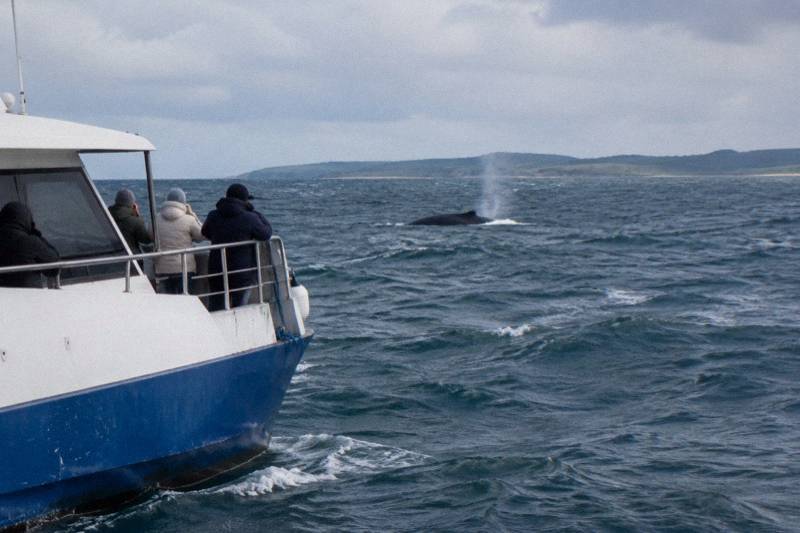
What Is The Best Month For A Phillip Island Whale Watching Cruise?
The best month for a Phillip Island whale watching cruise is June or July, inside the late May to September whale season. Compare the two whale cruises, winter weather and what each month offers.
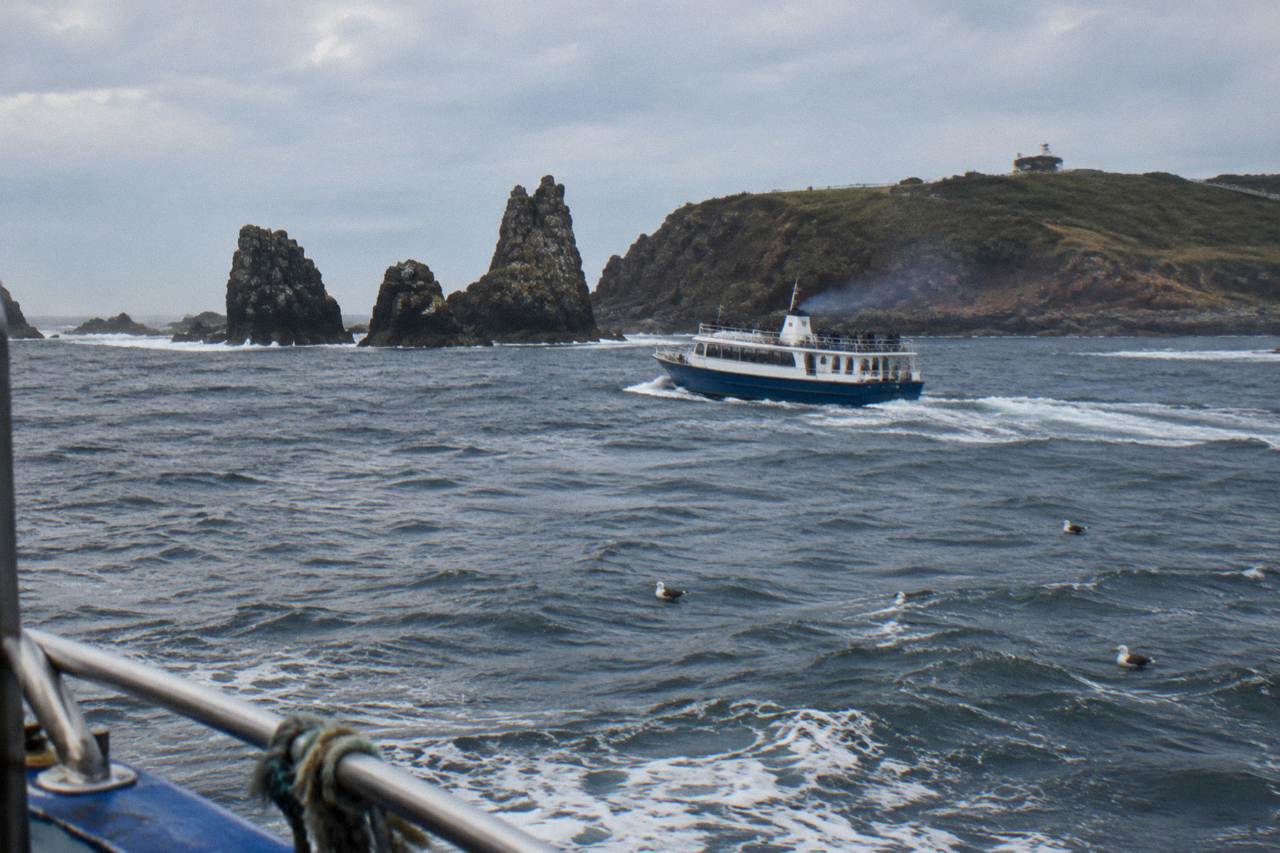
The best month is July, with June a close second: Visit Phillip Island names June and July as the peak of a whale season that runs late May to September. July brings the lowest mean maximum temperature at Rhyll, 13.4 °C, alongside 12.4 rain days, while the two whale cruises on offer, from $93 and from $122.77 per person, run across the whole window.
Both of the site's whale products sit inside that one seasonal frame. The Wildlife Coast Cruises 3 hour Dolphin And Whale Cruise from San Remo (seasonal) departs San Remo, passes the sheer cliffs of Cape Woolamai and is rated 4.6 across 83 reviews, from $93 per person. The Wildlife Coast Cruises 4 hour Whale Watching Cruise from Rhyll (seasonal) is the longest cruise on this site at 4 hours, rated 4.7 across 97 reviews, from $122.77 per person, and departs Rhyll on the northern shore. Neither runs outside late May to September, so the month question is really a question of where inside the window you want to stand. The guide to seasickness on these Phillip Island cruises covers seasickness on the water, so have a look before you book.
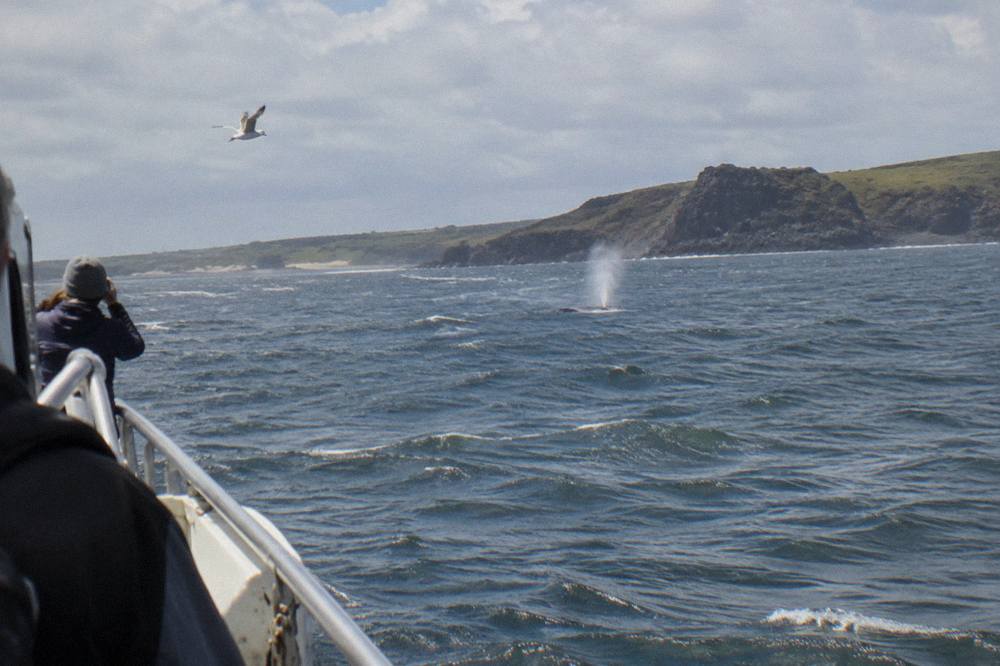
The reason the peak sits in midwinter is migration. Humpbacks move north along the Victorian coast through the colder months, and the operator describes humpbacks as by far the most commonly sighted whale around Phillip Island, with southern rights often resting in sheltered bays and orcas much rarer, seen particularly near seal colonies like Seal Rocks. No cruise promises a sighting on any given day, in any month. What the peak months change is how many animals are moving through the water off the island while your boat is out there.
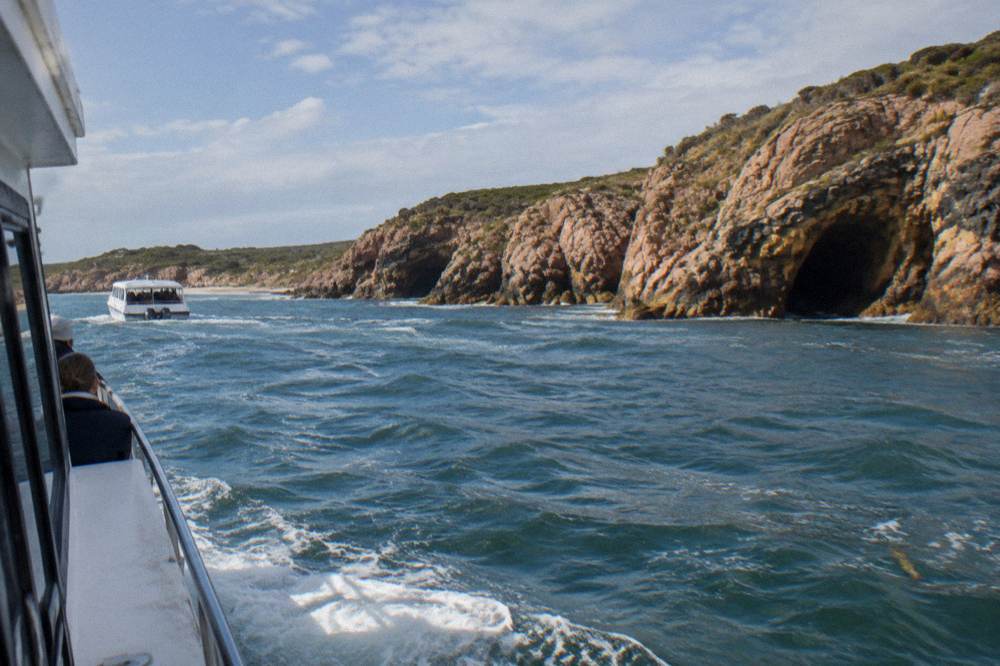
Month choice also changes the practical shape of the day. Rhyll, the nearest open Bureau of Meteorology station, records a June mean maximum of 14.1 °C and a July mean maximum of 13.4 °C, so a peak-season cruise is a cold-weather outing by any measure. The trade is straightforward: the middle of the window carries the strongest whale traffic, the shoulders of late May and September carry fewer fellow passengers and milder afternoons, with a September mean maximum of 16.2 °C. The best month depends on which side of that trade you favour.
The two whale cruises differ in more than price and port. The San Remo departure puts Cape Woolamai's cliffs on the route, and tea, coffee and cake are served, with alcohol, soft drinks and snacks available to purchase. The four hour cruise from Rhyll serves a fuller morning tea, coffee, tea, a muffin and a pastry, with more time to search Western Port and the surrounding waters. Free cancellation up to 24 hours before departure applies to both, though only the Rhyll departure's booking page notes that a weather cancellation gives another date or a full refund. More detail on the seasonal side of the decision sits in the guide to Phillip Island whale watching tours, and the San Remo product is covered in full in the guide to the Dolphin And Whale Cruise from San Remo.
When Does Whale Season Start And End Around Phillip Island?
Whale season around Phillip Island runs from late May to September, with the peak in June and July, according to Visit Phillip Island. Both whale cruises follow that window exactly: the Dolphin And Whale Cruise from San Remo and the 4 hour Whale Watching Cruise from Rhyll are seasonal products, and no cruise on the island runs whale trips outside it.
The season's boundaries come from the migration itself. Phillip Island Nature Parks notes that from late May to early July, humpbacks, southern right and killer whales migrate north past the island, which is the northbound leg that opens the window. The return movement carries the season through to September. Visit Phillip Island's whale watching page states the same frame plainly: from late May to September, with the peak whale season being June and July.
Late May is the earliest sensible month to book. September is the last month, with the mildest weather of the window at Rhyll, a mean maximum of 16.2 °C, and the tail of the migration still moving through. Neither shoulder is a poor choice. Both simply trade a slightly lower chance of crossing paths with whales against thinner crowds and warmer afternoons.
A couple of details are worth locking in before any booking. Sightings are never guaranteed in any month, and no sighting is ever promised on any Phillip Island cruise. The month you choose shifts the odds; it does not purchase a whale.
| Month | In whale season? | Rhyll mean max (C) | Rhyll rain days (1 mm+) | What the month offers |
|---|---|---|---|---|
| May (late) | Yes, opening | 16.5 | 10.8 | First northbound humpbacks, quiet boats |
| June | Yes, peak | 14.1 | 10.1 | Peak whale traffic, cold days |
| July | Yes, peak | 13.4 | 12.4 | Deepest part of the peak, coldest month |
| August | Yes | 14.4 | 12.7 | Migration still active, wettest month on average |
| September | Yes, closing | 16.2 | 11.5 | Mildest weather of the window, tail of season |
The rain-day figures in that table are annual-month averages recorded at Rhyll, the nearest open Bureau of Meteorology station, over a record running to 2026; July averages 12.4 days of 1 mm or more and August 12.7. August is also the wettest month on average by rainfall volume, 76.6 mm. None of that describes the open water off Cape Woolamai, and no sea-state claim can be made for any month, only that the land station numbers give a fair picture of what a winter day on the island feels like ashore.
Why Do June And July Work Best For A Whale Cruise From Phillip Island?
June and July sit at the centre of the northbound migration, which is why Visit Phillip Island names them the peak of the season. Humpbacks, the whale the operator describes as by far the most commonly sighted, move past the island in their greatest numbers in these two months, and both whale cruises, the 3 hour trip from San Remo and the 4 hour trip from Rhyll, run through them.
The mechanics are simple. Phillip Island Nature Parks records the northbound movement of humpbacks, southern right and killer whales from late May to early July, which places the strongest passage across June exactly. Whale watching cruises from Phillip Island then run three to four hours, the longest at four hours.
Weather is the honest counterweight. June at Rhyll averages a mean maximum of 14.1 °C and July 13.4 °C, the coldest pair of months in the record, and July carries an average of 12.4 rain days. A June or July cruise means a jacket, a beanie and realistic expectations about the sky. In exchange, whale sightings vary from day to day, and the live booking page shows which cruises are running on the dates you have in mind.
Should You Book The Rhyll Cruise For June Or July?
The Wildlife Coast Cruises 4 hour Whale Watching Cruise from Rhyll, from $122.77 per person and rated 4.7 across 97 reviews, suits either peak month, and it is the longest cruise on the water at 4 hours. More time out means more of the peak window covered on each departure, in June and July when the density of passing whales is highest.
Morning tea is served on board, coffee, tea, a muffin and a pastry, which earns its keep on a cold midwinter morning, and hotel pickup is stated as not included, so the trip to Rhyll is your own arrangement. Free cancellation up to 24 hours before the start applies, and the booking page adds that a weather cancellation by the operator gives another date or a full refund. That cancellation term is worth having in the two months with the most rain days. You can check availability through the tour page or read the guide to the Phillip Island whale watching season for the fuller picture.
What About Late May Or September For A Whale Cruise?
Late May and September are real whale months, not consolation prizes: they sit inside the late May to September season on both cruise booking pages. Late May catches the first northbound humpbacks with the quietest boats of the year, while September offers the mildest weather of the window, a mean maximum of 16.2 °C at Rhyll, with the migration's tail still passing.
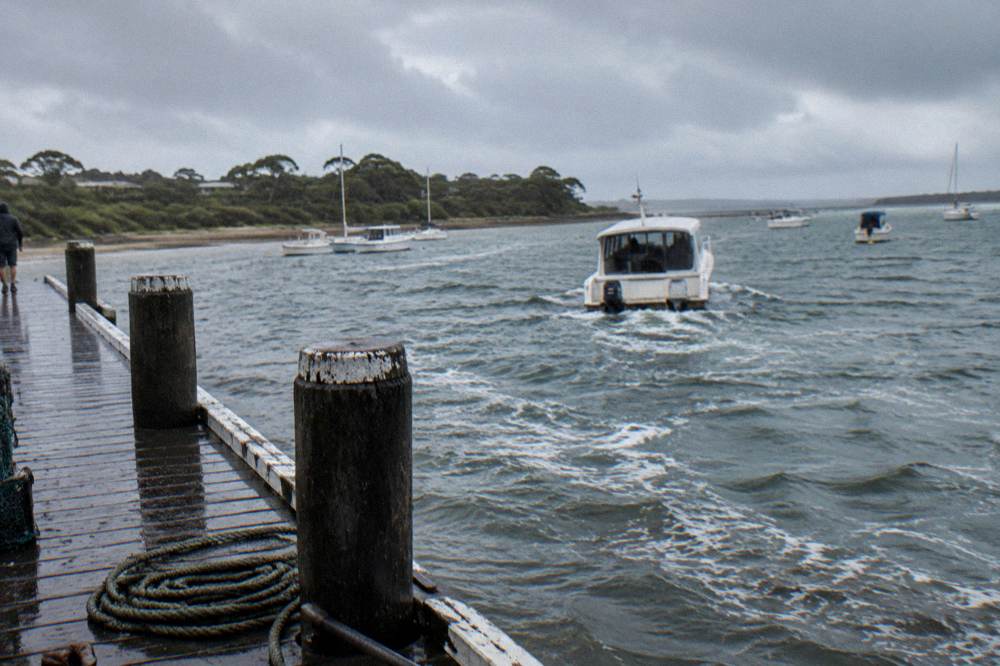
The risk in late May is clear: the migration is only beginning, so the number of animals within range of a cruise is lower than it will be two weeks later. The same is true of very early June in some years.
September is the gentler shoulder. The mean maximum at Rhyll rises to 16.2 °C from August's 14.4, rain volume eases from the August peak of 76.6 mm to 65.3 mm, and the whales that opened the season are still moving through on the return leg. A September booking trades some probability of whales for the most comfortable conditions any whale month offers. For a traveller who runs cold, or who is combining the cruise with walking at Cape Woolamai, that trade can be the right one.
Both shoulder months carry the same booking terms as the peak. Free cancellation up to 24 hours before departure with a full refund is stated on both whale booking pages, and both are seasonal products, so confirm the month you want is operating before locking in accommodation. Nothing in either booking page promises a sighting in any month, shoulder or peak, and any sentence that does should be treated as sales copy rather than fact.
What Is Winter Weather Like On A Phillip Island Whale Cruise?
Winter on Phillip Island is cold and changeable rather than extreme: Rhyll, the nearest open weather station, records a June mean maximum of 14.1 °C, a July mean maximum of 13.4 °C and a July mean minimum of 8.2 °C, with July averaging 12.4 rain days and August 12.7. Cape Woolamai is exposed and can experience severe weather changes, Nature Parks warns, so dress for the coldest forecast of the day.
Those numbers are land-station figures from the Bureau of Meteorology's Rhyll record, which runs from 1990 to 2026, and Rhyll sits on the northern shore of the island. They describe the town, not the open water, and Cape Woolamai itself is exposed and can experience severe weather changes. What they reliably tell you is what the morning at the jetty will feel like: single-digit mornings, an afternoon that struggles into the mid-teens, and a real chance of rain on roughly every third day in the wettest months.
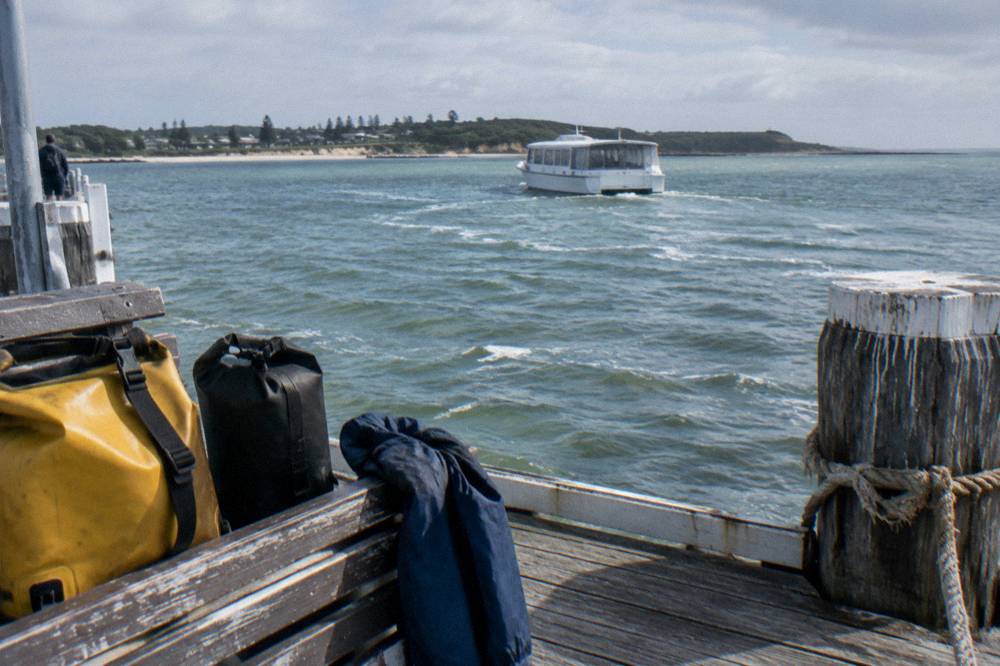
Wind is the other half of the picture. The Rhyll record shows 3 pm mean wind speeds ranging from 16.3 to 21.1 km/h across the year, with May the lowest month and December the highest, so winter sits in the middle of that band rather than at its worst. Practical clothing advice follows from the numbers rather than from any cruise booking page: layers, a windproof outer layer, closed shoes and something warm for the head. The post on what to wear on a Phillip Island cruise covers the packing side in detail.
The weather question matters most because of what it can do to a booking, not to comfort. The Rhyll Whale Watching Cruise booking page states that a weather cancellation by the operator gives another date or a full refund, on top of the free cancellation up to 24 hours before the start that applies to every cruise on the site. In July and August, the months with the highest average rain days, that clause is the single most valuable line on the page, and the post on what happens if weather cancels a Phillip Island cruise works through it. Build one spare morning into a peak-season trip if the whale cruise is the point of the visit.
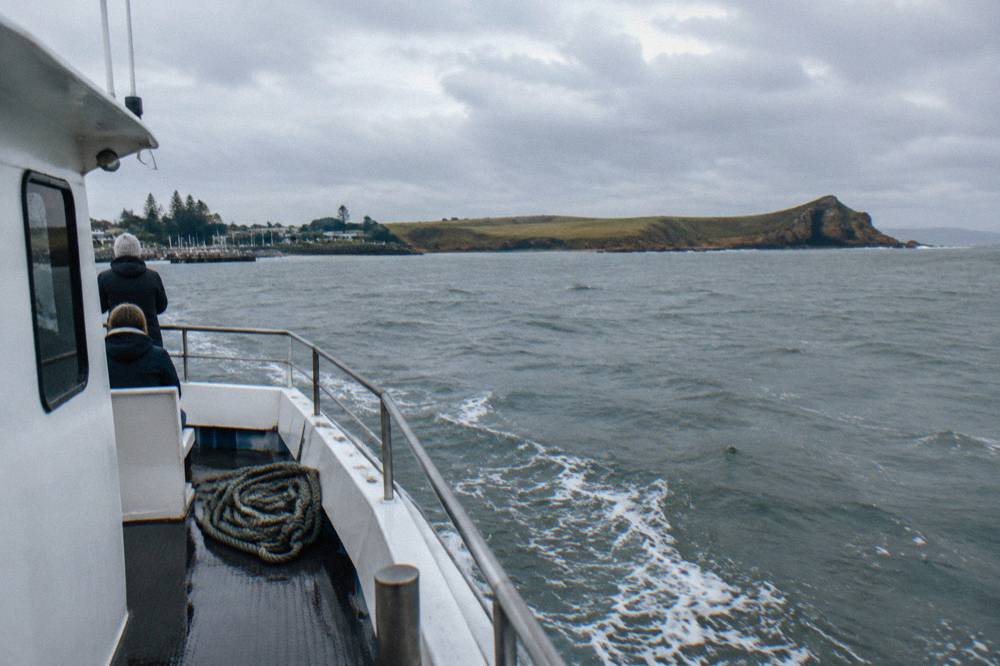
Which Whale Cruise Matches Which Month?
The two whale cruises divide the season between a shorter Cape Woolamai route and a longer deep-water search: the 3 hour Dolphin And Whale Cruise from San Remo, from $93, and the 4 hour Whale Watching Cruise from Rhyll, from $122.77 per person. Both run the full late May to September window, so the month does not force a choice, but each cruise plays differently across it.
The San Remo cruise is the natural pick for the shoulders. It passes the sheer cliffs of Cape Woolamai, which makes it a wildlife cruise and a coastal scenery cruise in one, and its three hour frame and lower from-price suit a late May gamble on the first northbound whales or a September trip where the coastal scenery carries the day even if whales stay distant. It is rated 4.6 across 83 reviews.
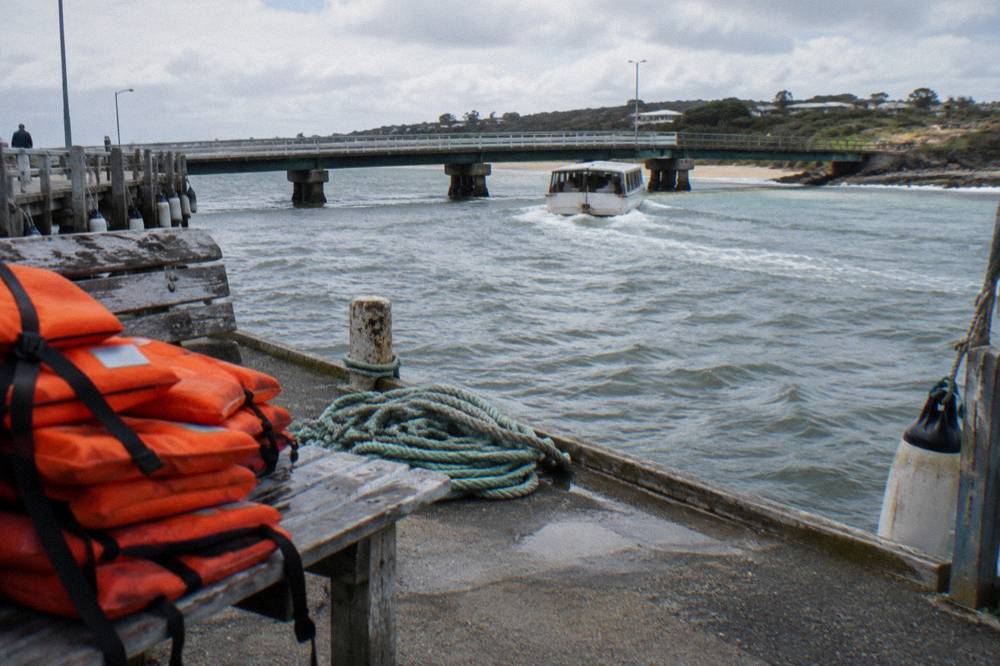
The Rhyll cruise leans the other way. Four hours, the longest cruise on this site, with a proper morning tea on board, is a format built for the peak months, when the density of whales in the water justifies more time out and the colder mornings justify the hot drinks. It is rated 4.7 across 97 reviews, from $122.77 per person, and hotel pickup is stated as not included, so factor the drive into a June or July morning. A reasonable pattern: book Rhyll for June or July, book San Remo for late May or September when the shorter, cheaper trip that passes the Cape Woolamai cliffs is an easy commitment.
| Cruise | From (USD pp) | Duration | Departs | Rating | Best months |
|---|---|---|---|---|---|
| Wildlife Coast Cruises 3 hour Dolphin And Whale Cruise (San Remo) | $93.00 | 3 hours | San Remo | 4.6, 83 reviews | Late May or September |
| Wildlife Coast Cruises 4 hour Whale Watching Cruise (Rhyll) | $122.77 | 4 hours | Rhyll | 4.7, 97 reviews | June or July |
The comparison page on which is better, a Cape Woolamai cruise or a Seal Rocks cruise, covers the non-whale side of the same decision. One warning that belongs to the whale products alone: outside late May to September, neither cruise runs, and the site's other trips, the 1 hour Cape Woolamai Scenic Cruise and the 2 hour Seal Watching Cruise among them, list no whales at all. The blog post on whether you can see whales on a Cape Woolamai cruise handles exactly that confusion.
How Do Whale Viewing Rules Affect A Phillip Island Cruise?
Victorian rules keep boats 200 m from whales and 100 m from dolphins, with caution zones extending to 300 m around a whale where vessels must hold a constant speed no greater than 5 knots, according to the Department of Energy, Environment and Climate Action. Licensed tour operators may approach closer than those distances under permit conditions. For a passenger this changes nothing about the month and everything about expectations: you are watching from a regulated distance, and the whales sometimes close that distance themselves.
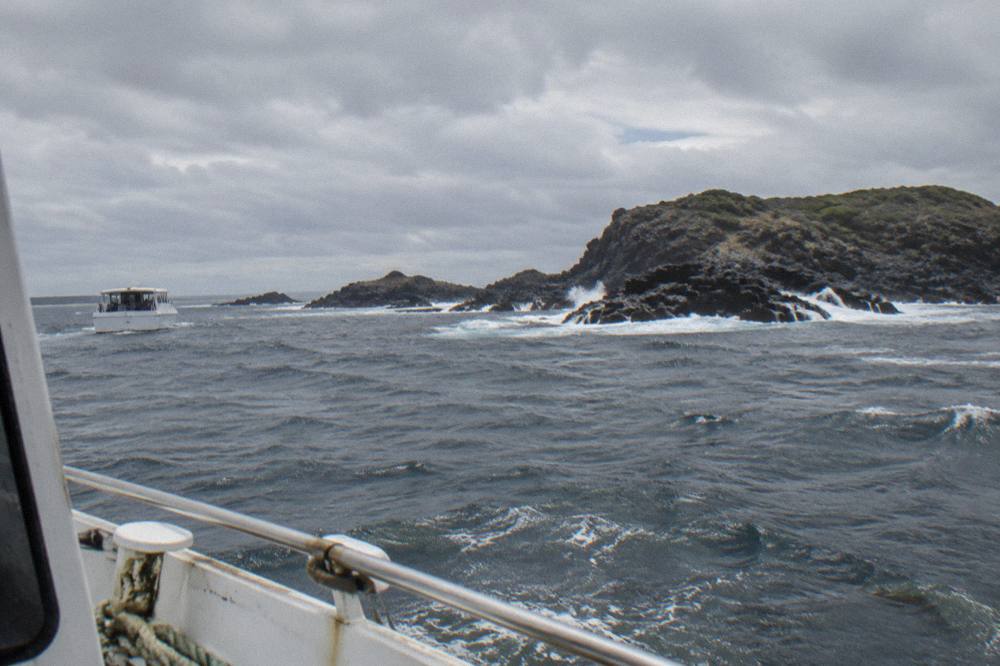
The same rules explain a quirk of seal-country whale watching. Orcas occasionally visit Phillip Island waters because seals are a main prey, Visit Phillip Island notes, and the operator adds that orcas are seen particularly near seal colonies like Seal Rocks. No cruise on this site promises orcas, which are described as much rarer than humpbacks, but the geography is the reason the possibility exists at all: the island sits beside one of Australia's largest fur seal colonies, at Seal Rocks, 1.8 km off Phillip Island per Nature Parks.
Two practical points follow. First, if an animal approaches the boat, the vessel is not committing an offence, the rules state, since any approach happens on the animal's own initiative. Second, touching or feeding any marine mammal is illegal, and drones must stay outside a 500 m radius of a whale, dolphin or seal, which matters to travellers who carry one. Neither point varies by month. For readers weighing the alternatives outside whale season, the guide to Phillip Island cruises covers the cruise options departing from San Remo, Cowes and Rhyll.
Can You See Whales From Cape Woolamai Without A Cruise?
Yes, from land and in season only: Nature Parks records that from late May to early July, humpbacks, southern right and killer whales migrate north past Phillip Island, and Wildlife Coast Cruises names Cape Woolamai among the coastal viewing spots, alongside Pyramid Rock, The Nobbies and San Remo. Land watching costs nothing at the Cape itself, where no entry fee is listed on the Nature Parks page, but it depends entirely on whales passing within sight of the shore.
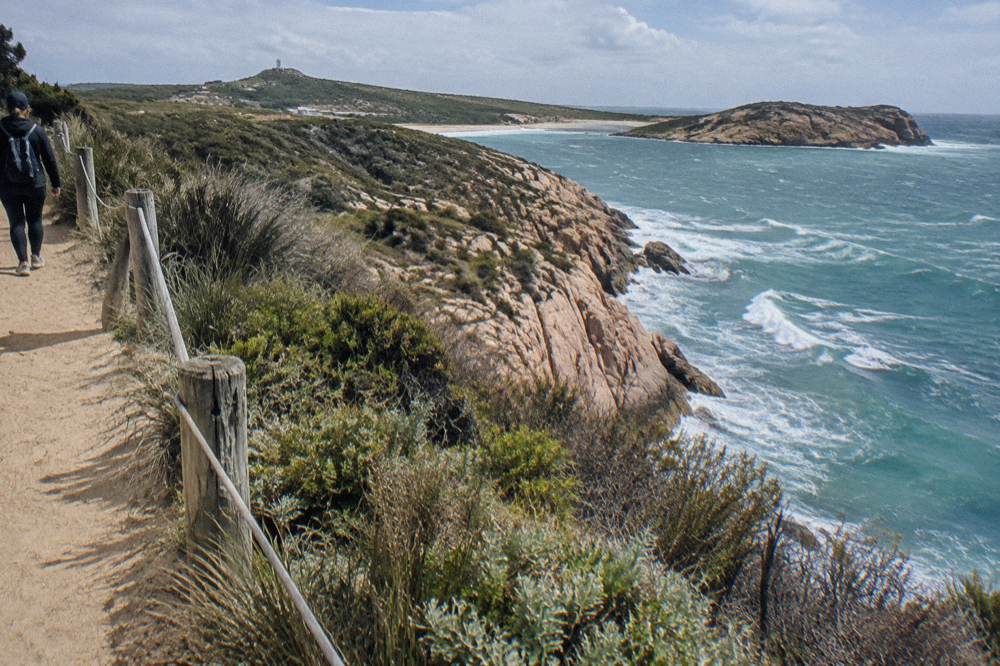
The cape is a serious viewpoint. The beacon lookout sits at the highest point on Phillip Island, 112 m, with 360-degree views of the island, San Remo and, on clear days, to Wilsons Promontory, and the walking tracks range from 4 to 8 kilometres. Visit Phillip Island also notes that southern right whales can sometimes be seen in quite shallow waters within 100 metres of the coast, which is the one whale species with a genuine shore-watching habit around the island. Sightings are posted on the Wildlife Whales app and PodWatch, which is how land watchers know where to stand on a given morning.
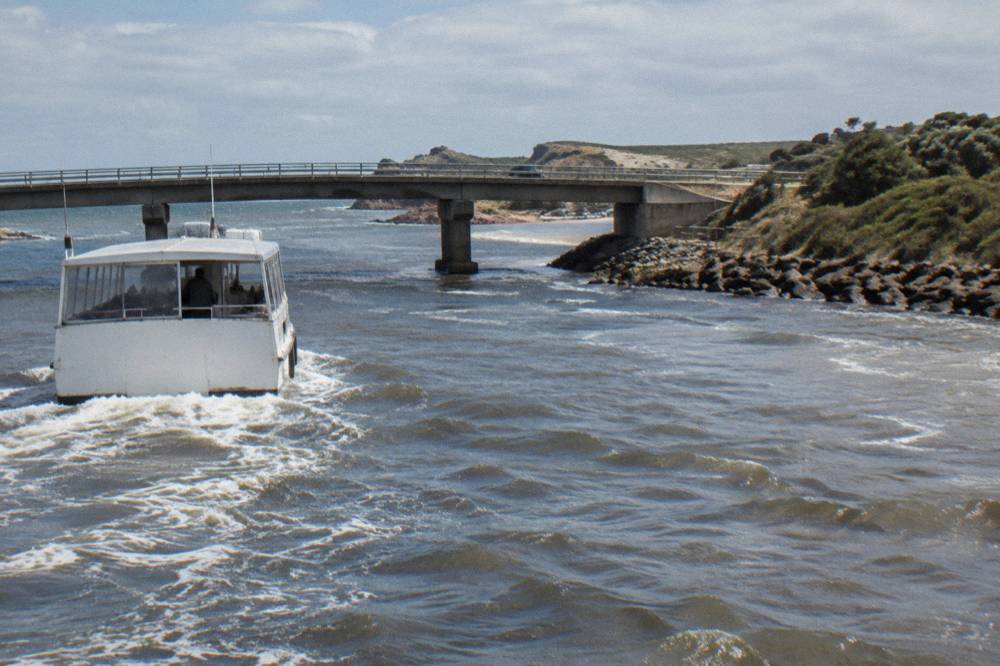
The honest comparison: a cruise puts you inside the 200 m regulatory envelope with hours to search, while the cape puts you 112 m above the water with a whole horizon to scan and no fuel burned. Plenty of visitors do both, walking the Cape Woolamai tracks on one day and booking the boat on another, and the shoulder months suit that combination best since the walks are more comfortable before the July cold settles in. Nature Parks warns that Cape Woolamai is exposed and can experience severe weather changes, so the same layering advice that applies to the boat applies doubled on the clifftops, and Cleeland Bight on the longer tracks may be impassable on a very high tide.
What If You Miss Whale Season Entirely?
If your trip falls outside late May to September, the two whale cruises are the wrong choice, but the 2 hour Seal Watching Cruise from Cowes, rated 4.9 across 236 reviews from $79 per person, and the 1 hour Cape Woolamai Scenic Cruise from San Remo, from $34, have no whale season attached on their booking pages. The island's marine wildlife does not disappear with the whales.
The seal cruise is the strongest substitute. Seal Rocks lies about 2 km off Phillip Island and, per Nature Parks, provides a breeding area and nursery for around 20,000 Australian fur seals, with between 5,000 and 8,000 seals on the rocks at any given time. Unlike whales, the colony is resident, though numbers on the rocks vary with time of year, tide and weather, so sightings are never a given, and the seal cruise has no stated season. The trade is explained in the post on when you can see seals on a Phillip Island cruise.
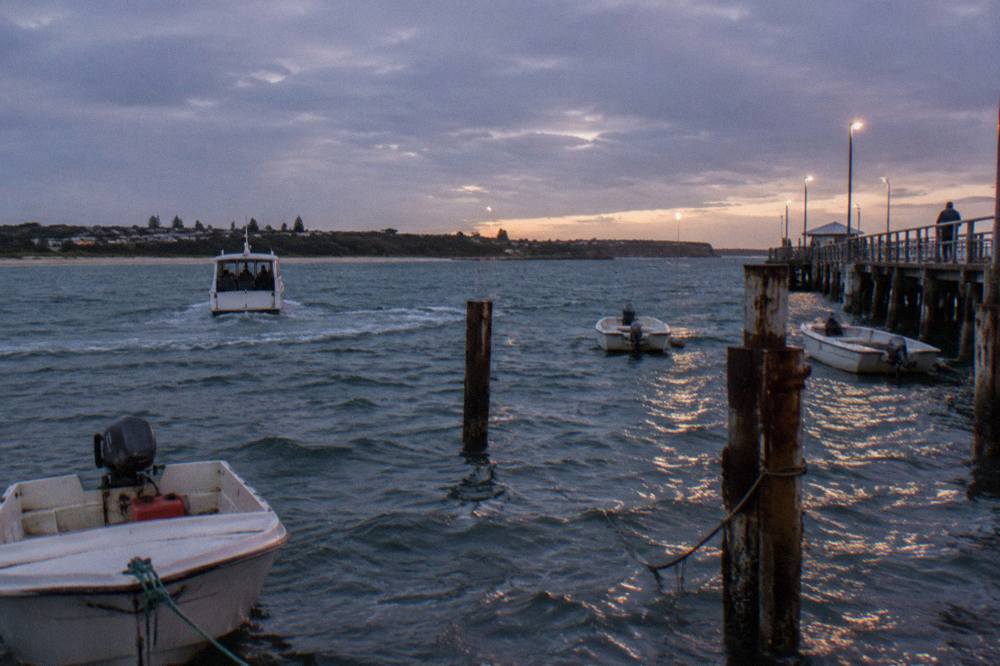
The Sunset Cruise from San Remo, from $55.42 per person and rated 4.7 across 39 reviews, a smaller review pool than the seal and Cape Woolamai products carry, runs on Western Port Bay with a fruit and nibbles platter and live music, with drinks, prawn buckets and cheese platters available to purchase. Add the 1 hour Cape Woolamai Scenic Cruise, which serves cake, tea and coffee while viewing the cape's granite cliffs and caves from the water, and a summer visitor still has a full plate of boat options. For the complete field, Cape Woolamai Cruises lays out all six trips across the three categories, from the $34 scenic hour to the $235.03 Melbourne day trip that pairs a 2 hour cruise leg with the Nobbies and the Penguin Parade.
Common Questions About Phillip Island Whale Watching Months
What Is The Best Month For A Phillip Island Whale Watching Cruise?
June or July. Visit Phillip Island names June and July as the peak of a whale season that runs late May to September, and both whale cruises on the island operate across that whole window.
When Does Whale Season Start And End At Phillip Island?
The season runs from late May to September. The 3 hour Dolphin And Whale Cruise from San Remo and the 4 hour Whale Watching Cruise from Rhyll are both seasonal products tied to that window, and no whale cruise runs outside it.
Can You See Whales At Phillip Island In August?
Yes, August is inside the late May to September season. It is not one of the two named peak months, and it carries the highest average rainfall at Rhyll, 76.6 mm, but both whale cruises operate through it.
Is A September Whale Cruise Worth Booking?
September is a reasonable shoulder month. It offers the mildest weather of the season, a mean maximum of 16.2 °C at Rhyll, with the tail of the migration still passing, though the density of whales is lower than in June or July.
Which Whales Pass Phillip Island In Winter?
Visit Phillip Island lists humpback, southern right and occasionally killer whales in winter. The operator describes humpbacks as by far the most commonly sighted, with orcas much rarer and seen particularly near seal colonies. No sighting is promised on any cruise.
Do The Whale Cruises Get Cancelled For Winter Weather?
They can be. Both whale booking pages state free cancellation up to 24 hours before the start, so if your plans shift you are not locked in. Check the live booking page for the operator's own weather policy before you sail.